

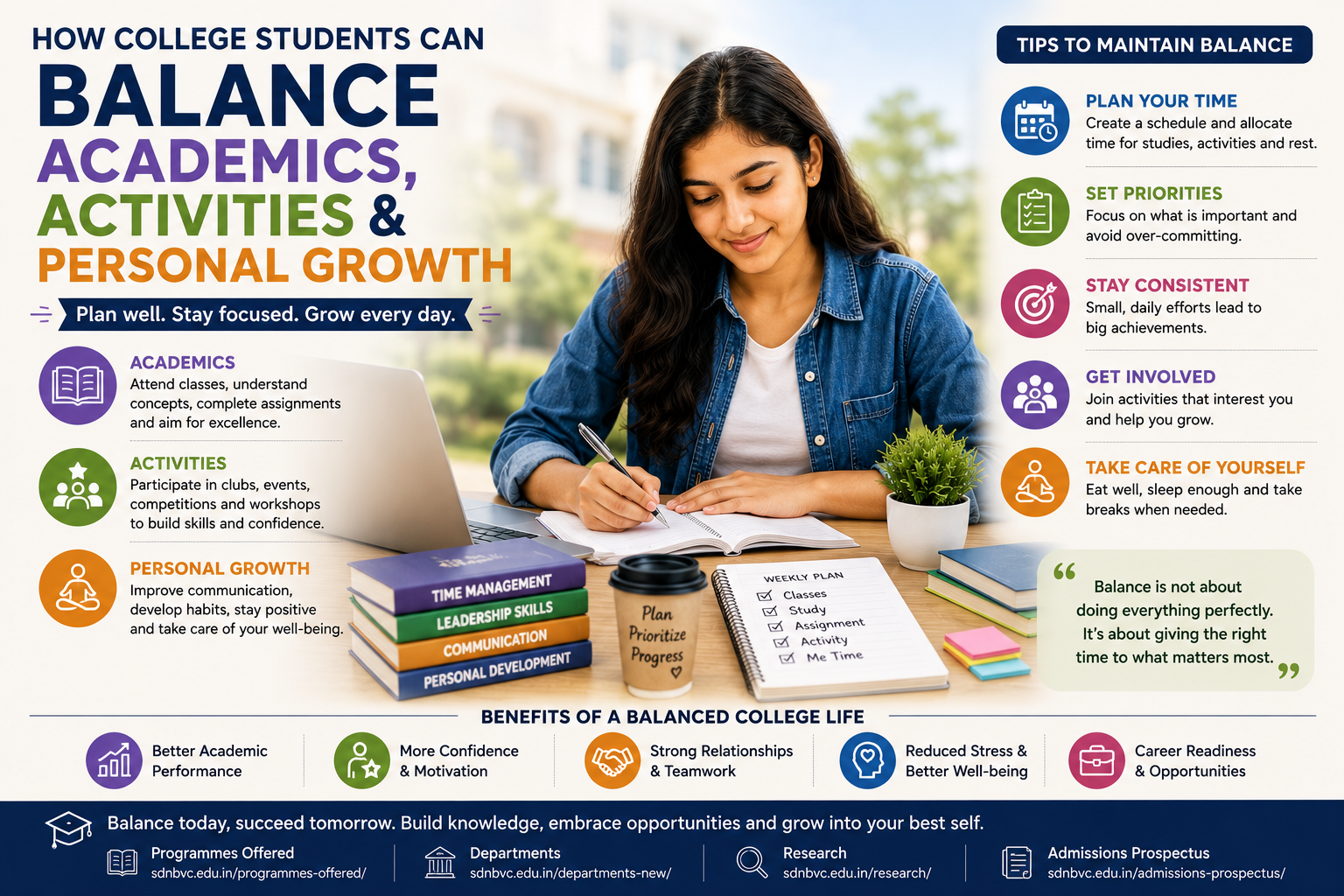
College life is an important stage in every student’s journey.
It is the time when students learn new subjects, meet new people, participate in activities, explore interests and prepare for future opportunities.
However, many students find it difficult to balance academics, college activities and personal growth. Some students focus only on marks. Some become too involved in activities and lose track of studies. Some feel stressed because they try to manage everything without a proper plan.
The right balance helps students enjoy college life while also building a strong academic foundation, useful skills, confidence and future readiness.
At SDNB Vaishnav College for Women, Chennai, students can use their college years to grow academically, socially and personally through classroom learning, department activities, seminars, projects, research exposure and campus participation.
Students can begin by exploring the programmes offered page to understand the academic options available at the college.
Why Balance Matters in College Life
College life is not only about completing a degree.
It is also about becoming independent, responsible, confident and prepared for higher studies or career opportunities.
When students balance academics, activities and personal growth, they can:
- Perform better in studies
- Participate in meaningful activities
- Build confidence and communication skills
- Develop leadership and teamwork abilities
- Reduce stress and confusion
- Prepare for internships and placements
- Improve time management
- Enjoy a healthier college experience
A balanced student is not someone who does everything perfectly. A balanced student is someone who knows how to manage priorities wisely.
Academics, Activities and Personal Growth: What Do They Mean?
Before learning how to balance these areas, students should understand what each one includes.
| Area | What It Includes | Why It Matters |
|---|---|---|
| Academics | Classes, assignments, exams, projects, seminars and subject learning | Builds knowledge, discipline and academic foundation |
| Activities | Clubs, competitions, events, workshops, volunteering and department programmes | Builds confidence, teamwork, leadership and exposure |
| Personal Growth | Communication, self-confidence, emotional balance, habits, goals and self-awareness | Helps students become responsible, independent and future-ready |
All three areas are connected. Academics build knowledge, activities build exposure and personal growth builds maturity.
Start by Understanding Your Priorities
The first step to balance is understanding your priorities.
Every student has different goals. Some students want to prepare for higher studies. Some want to build a strong resume for placements. Some want to improve confidence, communication or leadership skills. Some may be preparing for competitive exams or professional courses.
Students should ask themselves:
- What is my main academic goal this semester?
- Which subjects need more attention?
- Which activities will help me grow?
- How much time can I realistically give to activities?
- What personal skill do I want to improve?
- Am I managing my health and rest properly?
Clear priorities help students avoid unnecessary pressure and make better decisions.
Create a Simple Weekly Plan
A weekly plan can help students manage college responsibilities more easily.
Students do not need a complicated timetable. A simple plan is enough if it is practical and followed regularly.
A weekly plan should include time for:
- Classes and lectures
- Daily revision
- Assignments and project work
- Department activities or events
- Skill development
- Reading or research
- Rest and personal time
Planning the week in advance helps students avoid last-minute stress during exams, submissions and events.
Do Not Ignore Daily Revision
One of the biggest reasons students feel academic pressure is last-minute studying.
Daily revision does not have to take many hours. Even 30 to 45 minutes of focused revision can help students remember concepts better.
Students can revise better by:
- Reading class notes on the same day
- Highlighting important points
- Writing short summaries
- Clearing doubts early
- Revising difficult topics weekly
- Preparing before internal assessments
When students revise regularly, they get more time to participate in activities without affecting academic performance.
Choose Activities That Add Value
College activities are important, but students should choose them wisely.
Participating in every activity may lead to stress. Avoiding all activities may limit growth. The best approach is to select activities that match your interest, skills and goals.
Students can choose activities such as:
- Department seminars
- Paper presentations
- Workshops
- Competitions
- Student clubs
- Cultural events
- Volunteering
- Academic discussions
- Research-based activities
Students can explore academic departments through the official departments page and understand how department-level activities can support their growth.
Learn to Say No When Needed
Balance also means knowing when to say no.
Students may feel pressure to join every activity, attend every event or accept every responsibility. But taking too many commitments can affect studies, health and peace of mind.
Students should say no politely when:
- Exams or important submissions are near
- The activity does not match their goals
- They already have too many responsibilities
- They are feeling mentally or physically tired
- The commitment may affect academic performance
Saying no to some things helps students say yes to what matters most.
Use Free Time Productively
Many students lose useful time during breaks, travel or between classes.
Free time does not always need to be used for heavy studying. But small productive actions can make a big difference over time.
Students can use free time to:
- Review short notes
- Read a chapter summary
- Plan assignments
- Update a resume
- Read articles or newspapers
- Practise communication skills
- Organise study materials
- Reflect on weekly goals
Using small pockets of time wisely helps students reduce pressure later.
Build Skills Alongside Academics
Academic knowledge is important, but students should also build useful skills during college.
These skills support internships, interviews, higher studies and professional growth.
Students should focus on building:
- Communication skills
- Presentation skills
- Writing skills
- Digital literacy
- Teamwork
- Leadership
- Problem-solving
- Time management
- Confidence
Skill development does not need to happen separately from college life. Students can build skills through assignments, seminars, projects, workshops and group activities.
Keep Personal Growth as a Regular Goal
Personal growth means becoming a better version of yourself.
It includes self-confidence, discipline, emotional balance, communication, positive habits and the ability to handle challenges.
Students can work on personal growth by:
- Setting small monthly goals
- Improving one habit at a time
- Reading regularly
- Maintaining a positive routine
- Learning from mistakes
- Asking for feedback
- Taking care of physical and mental well-being
- Staying open to new experiences
Personal growth helps students become more confident in both academic and professional situations.
Manage Stress in a Healthy Way
College students may face stress due to exams, assignments, expectations, competition, personal goals or future planning.
Stress is common, but it should be managed properly.
Students can manage stress by:
- Planning work early
- Taking short breaks while studying
- Sleeping properly
- Talking to trusted teachers, friends or family
- Avoiding comparison with others
- Completing tasks step by step
- Spending time on hobbies
- Maintaining a balanced routine
A calm mind helps students learn better and participate more confidently.
Balance Group Work and Individual Study
Both group learning and individual study are useful.
Group work helps students share ideas, improve communication and understand different viewpoints. Individual study helps students focus deeply and understand concepts at their own pace.
Students should use both methods depending on the situation.
| Group Work Helps With | Individual Study Helps With |
|---|---|
| Discussions and idea sharing | Deep concentration |
| Group projects and presentations | Exam preparation |
| Communication practice | Personal revision |
| Teamwork and leadership | Understanding difficult topics |
| Peer learning | Self-discipline |
A smart balance between both methods can improve learning and confidence.
Use Department Guidance and Faculty Support
Students do not have to manage everything alone.
Faculty members and departments can guide students in academics, projects, presentations, research interests, higher studies and career planning.
Students should ask for guidance when they are confused about:
- Subject difficulty
- Project topics
- Research ideas
- Seminar preparation
- Course direction
- Higher study options
- Skill improvement
- Career planning
Taking guidance at the right time can help students make better academic and personal decisions.
Explore Research and Academic Curiosity
Research exposure can help students develop deeper thinking.
Students who are interested in academic growth can explore research through reading, projects, surveys, case studies, seminars and presentations.
Research helps students improve:
- Critical thinking
- Problem-solving
- Observation skills
- Academic writing
- Subject understanding
- Independent learning
Students interested in research-based learning can visit the official research page to understand the research environment at SDNB.
Keep Track of Your Growth
Students should regularly track their academic and personal progress.
This helps them understand what is improving and what needs more attention.
Students can track:
- Marks and internal performance
- Assignments completed
- Seminars attended
- Activities participated in
- Certificates earned
- Skills improved
- Books or articles read
- Projects completed
- Personal goals achieved
A simple notebook or digital document can help students maintain this record.
Common Mistakes Students Should Avoid
Students may lose balance when they do not plan properly.
Some common mistakes include:
- Waiting until the last minute to study
- Joining too many activities at once
- Ignoring health and rest
- Comparing progress with others
- Not asking for help when needed
- Spending too much time on distractions
- Focusing only on marks
- Avoiding extracurricular activities completely
- Not maintaining a proper routine
- Ignoring personal growth
Avoiding these mistakes can help students enjoy college life while staying focused on their goals.
Simple Weekly Balance Checklist for Students
Students can use this checklist to maintain balance every week.
| Checklist Point | Purpose |
|---|---|
| Attend classes regularly | Build subject understanding |
| Revise important topics | Reduce exam stress |
| Complete assignments on time | Maintain academic discipline |
| Participate in one meaningful activity | Build confidence and exposure |
| Practise one soft skill | Improve personal growth |
| Take proper rest | Maintain health and focus |
| Review weekly progress | Plan better for the next week |
Before Planning Your College Journey: Useful Official Links
Students can explore useful college information through official SDNB pages such as:
These pages can help students understand academic options, department details, research opportunities and admission-related information before planning their college journey.
Ready to Balance Academics, Activities and Growth?
Students should begin with small and practical steps.
Start by attending classes regularly, revising daily, choosing meaningful activities, managing time, asking for guidance and setting personal growth goals.
Students can also check the programmes offered, explore academic departments, understand research opportunities, and visit the admissions prospectus page for official details.
A balanced college journey helps students become more confident, capable and prepared for higher studies, internships, placements and future opportunities.
FAQs on Balancing Academics, Activities and Personal Growth
1. How can college students balance studies and activities?
Students can balance studies and activities by planning their week, revising regularly, choosing meaningful activities and avoiding too many commitments at the same time.
2. Are extracurricular activities important in college?
Yes. Extracurricular activities help students build confidence, teamwork, leadership, communication and practical exposure beyond classroom learning.
3. How much time should students spend on personal growth?
Students can spend a small amount of time regularly on personal growth through reading, communication practice, reflection, skill development and healthy habits.
4. Can activities affect academic performance?
Activities may affect academics if students do not manage time properly. But when planned well, activities can improve confidence, discipline and overall student development.
5. Why is time management important for college students?
Time management helps students complete assignments, prepare for exams, participate in activities and reduce last-minute stress.
6. How can students manage stress during college?
Students can manage stress by planning early, taking breaks, sleeping properly, avoiding comparison, talking to trusted people and completing tasks step by step.
7. What is personal growth for students?
Personal growth means improving confidence, communication, discipline, emotional balance, habits, self-awareness and readiness for future responsibilities.
Final Thought
Balancing academics, activities and personal growth is one of the most important parts of college life.
Students should focus on studies, but they should also participate in activities, build skills, manage time and work on personal confidence.
A balanced student is better prepared for higher studies, internships, placements and life after graduation.
At SDNB Vaishnav College for Women, students can use classroom learning, department activities, research exposure and campus opportunities to build a meaningful and confident college journey.