
Graduation is not only about completing a degree.
It is also about becoming ready for higher studies, internships, interviews, workplaces, research opportunities and real-life responsibilities.
Many students focus mainly on marks, subjects and exams during college. These are important, but they are not enough by themselves. To succeed after graduation, students also need soft skills.
Soft skills are personal, social and communication-based abilities that help students work with others, solve problems, manage time, express ideas and handle different situations with confidence.
At SDNB Vaishnav College for Women, Chennai, students can use their college years to develop these skills through classroom learning, department activities, seminars, group projects, presentations, academic events and campus participation.
Students can also explore the programmes offered page to understand different academic paths where soft skills can support future growth.
What Are Soft Skills?
Soft skills are non-technical skills that help a student communicate, behave, think and work effectively in academic and professional environments.
They are different from subject knowledge or technical skills. For example, knowing accounting, programming, literature, science or management is academic or technical knowledge. But explaining your ideas clearly, working in a team, managing deadlines and staying confident during interviews are soft skills.
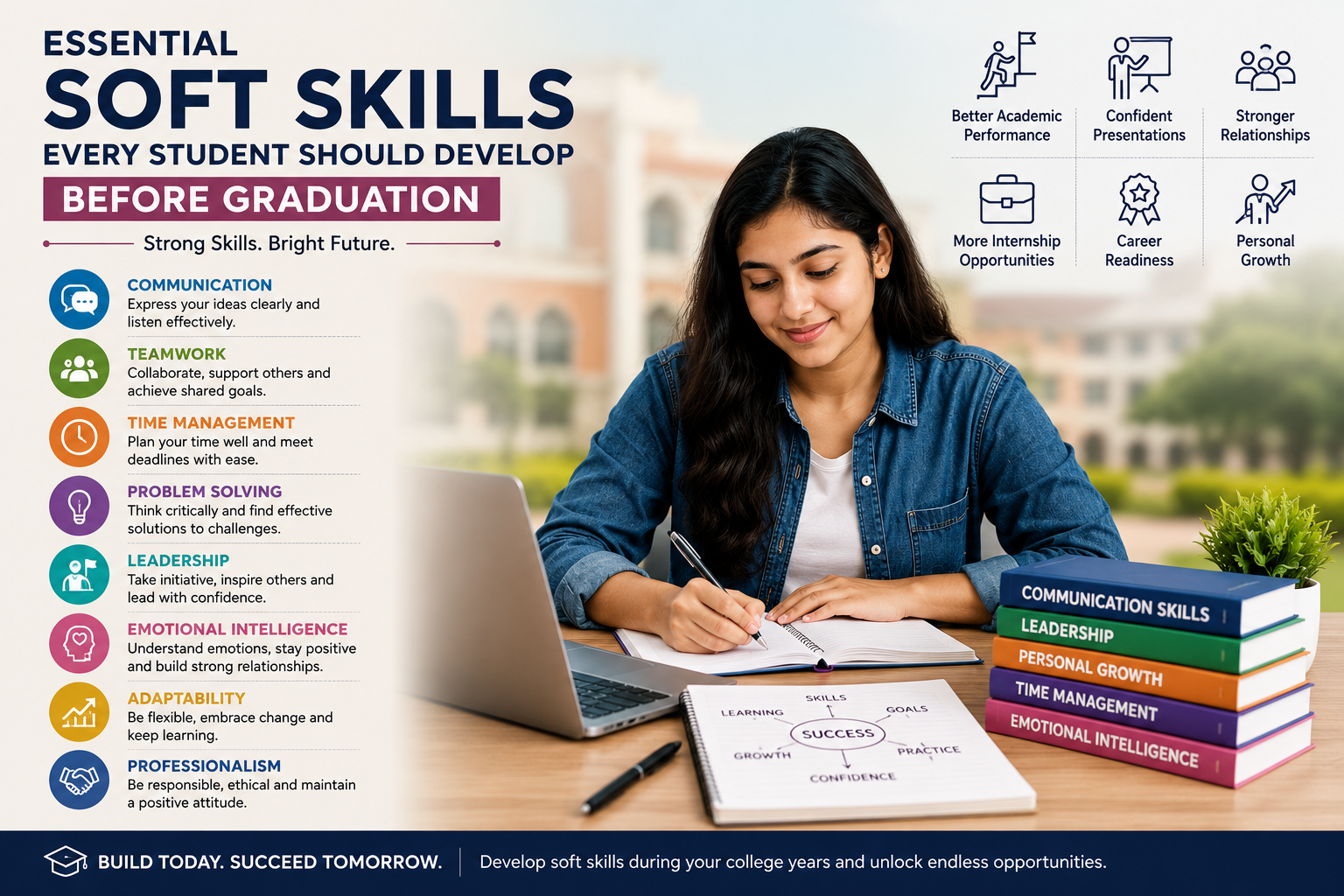
Important soft skills include:
- Communication skills
- Teamwork
- Leadership
- Time management
- Problem-solving
- Adaptability
- Emotional intelligence
- Decision-making
- Confidence
- Professional behaviour
These skills help students perform better in college and prepare strongly for life after graduation.
Why Soft Skills Matter Before Graduation
Before graduation, students should start preparing for the next stage of life.
Some students may choose higher studies. Some may apply for jobs. Some may prepare for competitive exams, research, entrepreneurship or professional courses. In every path, soft skills are useful.
Soft skills can help students:
- Perform better in interviews
- Communicate clearly with teachers, peers and professionals
- Participate confidently in seminars and presentations
- Manage academic pressure
- Work better in group projects
- Build leadership qualities
- Adjust to new learning and work environments
- Improve overall personality and confidence
Students who develop soft skills early often feel more prepared for opportunities after graduation.
Soft Skills vs Technical Skills
Both soft skills and technical skills are important for student success.
Technical skills help students complete subject-related tasks. Soft skills help students use their knowledge effectively in real situations.
| Technical Skills | Soft Skills |
|---|---|
| Related to subject knowledge or practical ability | Related to behaviour, communication and personality |
| Can include coding, accounting, lab work, research tools or data handling | Can include teamwork, confidence, leadership and communication |
| Helps students complete academic or job-specific tasks | Helps students work with people and handle situations |
| Usually learned through courses, labs and practical training | Developed through practice, interaction and experience |
| Important for eligibility and role-based work | Important for interviews, growth and long-term success |
A student with strong subject knowledge and good soft skills can create a better impression in academic and professional settings.
1. Communication Skills
Communication is one of the most important soft skills every student should build before graduation.
Good communication does not only mean speaking in English or using big words. It means expressing ideas clearly, listening carefully, asking relevant questions and presenting thoughts in a respectful way.
Students need communication skills for:
- Classroom discussions
- Seminars and presentations
- Group projects
- Internship applications
- Job interviews
- Email writing
- Higher study interviews
- Professional networking
Students can improve communication by participating in presentations, reading regularly, practising writing, speaking in group discussions and asking questions in class.
2. Time Management
Time management helps students complete their work without unnecessary stress.
College life includes classes, assignments, exams, projects, seminars, activities, personal responsibilities and sometimes internships. Without proper time management, students may feel confused or overloaded.
Students can manage time better by:
- Making a weekly study plan
- Completing assignments before deadlines
- Dividing large tasks into smaller steps
- Avoiding last-minute exam preparation
- Keeping separate time for revision
- Reducing distractions while studying
- Using a notebook, planner or digital calendar
Good time management helps students stay disciplined and improves academic performance.
3. Teamwork
Teamwork is important because students will often need to work with others during college and after graduation.
Group assignments, department events, seminars, competitions, projects and workplace tasks all require teamwork.
A good team member knows how to listen, contribute, respect opinions and complete responsibilities on time.
Teamwork helps students build:
- Cooperation
- Patience
- Responsibility
- Listening ability
- Conflict handling
- Shared decision-making
- Respect for different viewpoints
Students can develop teamwork by actively participating in department activities, group discussions, student clubs and academic events.
4. Leadership Skills
Leadership does not always mean holding a title or becoming a class representative.
Leadership means taking responsibility, guiding others, solving problems and helping a group move in the right direction.
Students can show leadership by:
- Taking initiative in group projects
- Helping classmates understand difficult topics
- Volunteering for college events
- Managing small responsibilities during seminars
- Supporting team members during activities
- Speaking up with useful ideas
Leadership skills are useful for placements, higher studies, internships and future professional roles.
5. Problem-Solving Ability
Problem-solving is the ability to understand a challenge and find a practical solution.
Students use problem-solving skills in exams, projects, assignments, research work, group activities and daily decision-making.
Problem-solving does not mean having an immediate answer for everything. It means thinking clearly, analysing the situation and choosing the best possible action.
Students can improve problem-solving by:
- Understanding the root cause of a problem
- Breaking big problems into smaller parts
- Discussing ideas with teachers or classmates
- Reading case studies
- Working on projects
- Learning from mistakes
- Practising logical thinking
This skill is useful in every stream, including arts, science, commerce, management and research.
6. Adaptability
Adaptability means adjusting well to new situations.
Students may face new subjects, new teaching methods, new classmates, digital tools, changing exam patterns, internships or career expectations. Adaptability helps them handle these changes without losing confidence.
Adaptable students are open to learning and improvement.
Students can develop adaptability by:
- Being open to feedback
- Trying new learning methods
- Participating in different activities
- Learning basic digital tools
- Staying calm during changes
- Accepting that mistakes are part of learning
Adaptability is especially important for students preparing for modern careers where skills and expectations keep changing.
7. Emotional Intelligence
Emotional intelligence means understanding your own emotions and responding properly to others.
College students may experience pressure due to exams, assignments, competition, family expectations, career confusion or personal challenges. Emotional intelligence helps students manage these situations in a balanced way.
Emotionally intelligent students can:
- Stay calm under pressure
- Understand their strengths and weaknesses
- Respond instead of reacting quickly
- Respect other people’s feelings
- Handle feedback positively
- Build better relationships
This skill improves confidence, decision-making and personal growth.
8. Confidence
Confidence helps students express themselves without fear.
Many students have good ideas but hesitate to speak because they fear mistakes or judgement. Building confidence during college can make a big difference in interviews, presentations and future opportunities.
Students can build confidence by:
- Participating in small classroom discussions
- Practising presentations
- Preparing well before speaking
- Accepting mistakes as learning
- Taking part in competitions or events
- Improving communication step by step
- Celebrating small achievements
Confidence grows with regular practice. Students do not need to become perfect speakers immediately.
9. Decision-Making Skills
Decision-making is important because students must make many choices during college.
These choices may include selecting electives, choosing projects, applying for internships, planning higher studies, preparing for placements or deciding career goals.
Good decision-making helps students avoid confusion and pressure.
Students can make better decisions by:
- Understanding their interests
- Comparing available options
- Taking advice from teachers or mentors
- Checking official information before applying
- Thinking about long-term goals
- Avoiding decisions based only on peer pressure
Students can use official pages such as programmes offered and admissions prospectus to make informed academic decisions.
10. Professional Behaviour
Professional behaviour means acting responsibly in academic and work-related situations.
Students should start building professional habits before graduation because these habits are useful during internships, interviews and jobs.
Professional behaviour includes:
- Being punctual
- Respecting deadlines
- Responding politely
- Dressing appropriately for formal situations
- Writing clear emails
- Listening during meetings or lectures
- Taking responsibility for assigned work
- Maintaining academic honesty
These habits help students create a positive impression wherever they go.
How Departments Help Students Build Soft Skills
Departments play an important role in student development.
Through academic activities, presentations, seminars, projects and discussions, students get many opportunities to practise soft skills.
Students can explore different academic departments through the official departments page.
Department activities can help students improve:
- Presentation skills
- Subject confidence
- Teamwork
- Academic writing
- Research thinking
- Leadership
- Peer interaction
Students should actively participate in department-level opportunities instead of only attending regular classes.
The Role of Research in Skill Development
Research is not only for postgraduate students or Ph.D. scholars.
Even undergraduate students can begin developing research-related skills through reading, project work, presentations, surveys, case studies and academic writing.
Research helps students build:
- Critical thinking
- Patience
- Problem-solving
- Academic writing
- Observation skills
- Data interpretation
- Independent learning
Students interested in research exposure can visit the official research page to understand the research environment at SDNB.
Soft Skills Every Student Should Practise Regularly
Soft skills improve with practice. Students should not wait for final-year placements to begin.
| Soft Skill | How Students Can Practise It | Where It Helps |
|---|---|---|
| Communication | Presentations, discussions, reading and writing | Interviews, seminars and group work |
| Time Management | Study plans, assignment schedules and revision routines | Exams, projects and deadlines |
| Teamwork | Group projects, clubs and department events | Internships, jobs and academic activities |
| Leadership | Volunteering, organising and taking responsibility | Events, interviews and professional growth |
| Problem-Solving | Projects, case studies and logical thinking | Research, workplace tasks and decision-making |
| Adaptability | Trying new tools, accepting feedback and learning continuously | Higher studies, internships and changing careers |
How Students Can Build Soft Skills During College
Students can build soft skills through small but regular actions.
Useful ways to improve soft skills include:
- Attend seminars and workshops
- Participate in classroom discussions
- Volunteer for department activities
- Take part in group projects
- Practise public speaking
- Read books, articles and newspapers
- Prepare and update a resume
- Ask for feedback from teachers
- Join academic or extracurricular activities
- Reflect on strengths and areas for improvement
Soft skills become stronger when students use them repeatedly in real situations.
Common Mistakes Students Should Avoid
Many students realise the importance of soft skills only during final-year interviews.
Some common mistakes include:
- Focusing only on marks
- Avoiding presentations due to fear
- Not participating in group activities
- Ignoring communication practice
- Waiting until final year to prepare for interviews
- Not asking for feedback
- Being careless with deadlines
- Not learning basic email etiquette
- Avoiding leadership opportunities
- Not maintaining confidence after mistakes
Avoiding these mistakes can help students become more confident and prepared before graduation.
Before Planning Your Skill Development: Useful Official Links
Students can explore useful college information through official SDNB pages such as:
These pages can help students understand academic options, department details, research opportunities and admission-related information before planning their college journey.
Ready to Develop Soft Skills Before Graduation?
Students should begin developing soft skills from the first year of college.
Small actions such as speaking in class, managing time, joining activities, completing projects, attending workshops and asking for feedback can create strong personal growth before graduation.
Students can also check the programmes offered, explore academic departments, understand research opportunities, and visit the admissions prospectus page for official details.
The earlier students begin, the more confident they become for higher studies, internships, placements and future career opportunities.
FAQs on Soft Skills for Students
1. What are soft skills for students?
Soft skills are personal and communication-based abilities that help students work with others, manage time, solve problems, express ideas and handle academic or professional situations confidently.
2. Why are soft skills important before graduation?
Soft skills are important because they help students prepare for interviews, internships, higher studies, presentations, teamwork, leadership roles and future workplace expectations.
3. Which soft skill should students develop first?
Communication is one of the first soft skills students should develop because it supports classroom learning, presentations, interviews and professional interaction.
4. Can soft skills improve academic performance?
Yes. Skills such as time management, confidence, communication and problem-solving can help students study better, participate actively and complete academic work more effectively.
5. How can students improve soft skills in college?
Students can improve soft skills by participating in seminars, presentations, group projects, department events, workshops, clubs and regular classroom discussions.
6. Are soft skills useful for higher studies?
Yes. Soft skills such as academic writing, communication, research thinking, time management and confidence are useful for postgraduate studies, research and interviews.
7. Do employers value soft skills?
Yes. Employers often look for students who can communicate clearly, work in teams, manage responsibilities, solve problems and adapt to workplace situations.
Final Thought
Soft skills are essential for every student before graduation.
Marks and subject knowledge are important, but students also need communication, confidence, teamwork, time management, leadership, adaptability and problem-solving skills to succeed in the future.
College years are the best time to build these skills step by step.
At SDNB Vaishnav College for Women, students can use academic learning, department activities, research exposure, seminars, projects and campus participation to become more confident, capable and prepared for life after graduation.