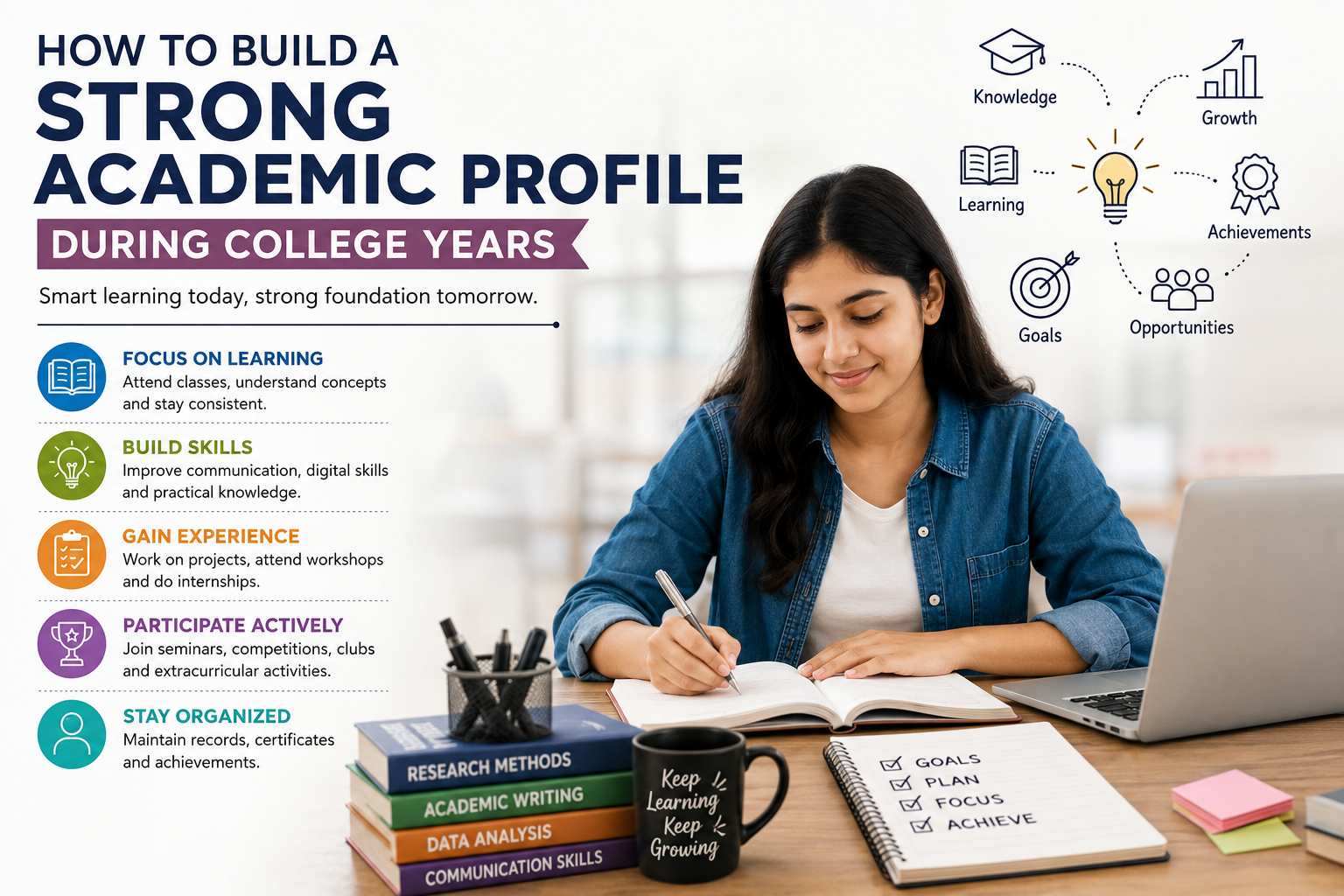
College years are not only about attending classes and completing exams.
They are also the most important years for building a strong academic profile that can support your future studies, placements, internships, research opportunities, and career growth.
A good academic profile shows that a student is serious, consistent, skilled, and ready for future opportunities. It is not built in one day. It is developed slowly through regular learning, participation, discipline, projects, communication skills, and smart planning.
For students, especially those beginning their undergraduate or postgraduate journey, college is the right time to build this foundation.
At SDNB Vaishnav College for Women, Chennai, students can use their academic years to develop subject knowledge, confidence, skills, and career readiness through classroom learning, department activities, seminars, projects, workshops, and campus opportunities.
Students can also explore the programmes offered page to understand different academic options available at the college.
What Is an Academic Profile?
An academic profile is a complete picture of a student’s learning journey.
It includes marks, subject knowledge, projects, internships, certifications, research work, presentations, competitions, workshops, extracurricular participation, communication skills, and achievements.
A strong academic profile helps students when they apply for:
- Higher studies
- Internships
- Campus placements
- Scholarships
- Research opportunities
- Competitive exams
- Professional courses
- First job opportunities
It shows what a student has learned beyond regular classroom study.
Why a Strong Academic Profile Matters
A strong academic profile helps students stand out.
Many students complete degrees every year. But students who actively build their profile during college have a better chance of being noticed by employers, universities, and professional institutions.
A good academic profile can help you:
- Improve confidence
- Build career clarity
- Prepare for interviews
- Apply for higher studies
- Showcase your achievements
- Develop subject depth
- Become ready for professional opportunities
College students should not wait until the final year to start building their profile. The process should begin from the first year itself.
Academic Profile vs Academic Marks
Marks are important, but they are only one part of your academic profile.
Your academic profile includes both performance and participation.
| Academic Marks | Academic Profile |
|---|---|
| Focuses mainly on exam scores | Includes marks, skills, projects, activities and achievements |
| Shows subject performance | Shows overall student development |
| Important for eligibility | Important for opportunities |
| Measured through exams | Built through continuous learning and participation |
| Limited to academics | Includes academic, professional and personal growth |
A student with good marks and active participation will usually have a stronger profile than a student who only focuses on exams.
Start With Consistent Academic Performance
The first step to building a strong academic profile is maintaining consistency in studies.
Students do not need to be perfect in every subject, but they should try to understand concepts clearly and avoid last-minute studying.
Consistent academic performance helps students build discipline and confidence.
Students can improve academic performance by:
- Attending classes regularly
- Taking clear notes
- Revising topics weekly
- Asking questions when concepts are unclear
- Preparing before internal exams
- Completing assignments on time
- Reading beyond textbooks
When students stay consistent from the beginning, they reduce pressure during exams and perform better.
Choose Subjects and Projects Carefully
Projects are an important part of a student’s academic profile.
A good project shows that a student can apply classroom learning to real situations. It also helps during interviews, higher study applications and research discussions.
Students should choose project topics based on:
- Subject interest
- Career goals
- Current industry relevance
- Research value
- Practical usefulness
- Faculty guidance
- Availability of resources
A project should not be selected only because it is easy. It should help the student learn something meaningful.
Students can discuss project ideas with faculty members and department mentors to choose topics that support their academic and career direction.
Participate in Seminars and Workshops
Seminars and workshops help students learn beyond the syllabus.
They expose students to new ideas, current trends, expert opinions and practical knowledge. Participation also shows that a student is interested in learning and self-improvement.
Students should attend workshops related to:
- Subject knowledge
- Research methods
- Communication skills
- Digital skills
- Career planning
- Interview preparation
- Entrepreneurship
- Industry awareness
Even if a workshop seems small, it can add value to your learning and profile.
Certificates from relevant seminars and workshops can also be useful when applying for internships, higher studies or jobs.
Build Communication Skills
Communication skills are very important for every student.
A student may have good subject knowledge, but if she cannot explain her ideas clearly, it may affect interviews, presentations, group discussions and professional growth.
College students should focus on improving:
- Speaking skills
- Writing skills
- Presentation skills
- Listening skills
- Group discussion ability
- Email writing
- Confidence while expressing ideas
Students can build communication skills by participating in classroom discussions, presentations, debates, seminars and group activities.
Good communication helps students perform better in both academic and career situations.
Take Part in Department Activities
Departments play an important role in shaping a student’s academic journey.
Department activities give students opportunities to learn, participate, present, organise and interact with faculty and peers.
Students can explore academic departments through the official departments page.
Students should take part in:
- Department seminars
- Paper presentations
- Quiz competitions
- Academic events
- Guest lectures
- Subject clubs
- Group discussions
- Student presentations
These activities help students build confidence and subject interest.
They also create useful experiences that can be added to a resume or academic portfolio.
Develop Digital and Technical Skills
In today’s career world, digital skills are useful for students from every stream.
Whether a student is from arts, science, commerce, management or any other field, basic digital literacy is important.
Students should learn skills such as:
- MS Office or Google Workspace
- Online research
- Data handling
- Presentation tools
- Email communication
- Basic design tools
- Digital documentation
- Internet safety
- Subject-related software
Students who develop digital skills during college become better prepared for internships, projects, placements and higher studies.
Complete Relevant Certifications
Certifications can strengthen an academic profile when they are chosen wisely.
Students should not collect certificates randomly. Instead, they should choose short courses or certifications that support their subject, career goal or skill gap.
Useful certification areas may include:
- Communication skills
- Computer skills
- Data analysis
- Finance basics
- Digital marketing
- Research writing
- Programming
- Entrepreneurship
- Personality development
- Industry-specific skills
A certificate is more valuable when the student can actually explain what she learned from it.
Focus on Internships and Practical Exposure
Internships help students understand how classroom learning is used in real work situations.
Even a short internship can give students practical exposure, confidence and career clarity.
Internships can help students learn:
- Workplace discipline
- Professional communication
- Teamwork
- Problem-solving
- Time management
- Industry expectations
- Practical application of subject knowledge
Students should start exploring internships early, instead of waiting until the final semester.
Internship experience can make a student’s resume stronger and help during job interviews.
Build a Good Resume from the First Year
Many students start preparing their resume only during final-year placements.
This is a mistake.
A resume should be built gradually from the first year of college. Students should keep track of their achievements, certificates, projects, activities and responsibilities.
A student resume can include:
- Academic details
- Project work
- Internships
- Certifications
- Seminars attended
- Workshops completed
- Department activities
- Leadership roles
- Skills
- Achievements
- Volunteer experience
Updating the resume regularly saves time and helps students understand where they need improvement.
Develop Research and Writing Skills
Research and writing skills are useful for students who want to pursue higher studies, teaching, research, content-based careers or academic roles.
Students can begin by reading articles, journals, case studies, reports and subject-related materials.
They can also try writing:
- Short academic notes
- Project reports
- Research summaries
- Presentation content
- Book reviews
- Case studies
- Seminar papers
Research exposure helps students develop analytical thinking, independent learning and subject depth.
Students interested in research-based academic growth can visit the official research page to understand the research environment at SDNB.
Maintain a Record of Achievements
Students should keep a proper record of all academic and extracurricular achievements.
This can include certificates, mark sheets, project reports, internship letters, participation certificates, recommendation letters and published work if any.
A simple digital folder can help students organise everything.
Students can create folders for:
- Academic documents
- Certificates
- Projects
- Internship records
- Resume versions
- Achievement photos
- Competition details
- Research work
Having everything organised makes it easier to apply for jobs, higher studies, scholarships and internships.
Build Good Relationships with Faculty
Faculty guidance is very important in building a strong academic profile.
Teachers can help students understand subjects better, choose projects, prepare for presentations, identify strengths and plan future academic or career paths.
Students should feel comfortable asking for guidance when needed.
Faculty members can support students through:
- Academic advice
- Project guidance
- Research direction
- Career suggestions
- Recommendation letters
- Higher study guidance
- Skill improvement suggestions
A student who actively learns from faculty guidance can make better decisions during college.
Participate in Extracurricular Activities
A strong academic profile is not limited only to marks and classroom learning.
Extracurricular activities help students build leadership, teamwork, confidence, creativity and social awareness.
Students can participate in:
- Cultural activities
- Clubs
- NSS or social service activities
- Competitions
- Sports
- Debates
- College events
- Student committees
These activities show that a student is active, responsible and capable of managing different responsibilities.
Employers and institutions often value students who show all-round development.
Common Mistakes Students Should Avoid
Students often miss opportunities because they do not plan early.
Some common mistakes include:
- Waiting until final year to build a resume
- Ignoring communication skills
- Not participating in seminars or workshops
- Choosing projects without interest
- Collecting certificates without learning
- Not maintaining academic documents
- Avoiding faculty guidance
- Focusing only on marks
- Not exploring internships
- Poor time management
Avoiding these mistakes can help students build a stronger and more useful academic profile.
Before Planning Your Academic Growth: Useful Official Links
Students can explore useful college information through official SDNB pages such as:
These pages can help students understand academic options, department details, research opportunities, admission information and programme-related updates before planning their college journey.
Ready to Build Your Academic Profile?
Students should start building their academic profile from the first year itself.
Small steps taken regularly can create a strong profile by the time students complete their degree.
Start by attending classes regularly, participating in department activities, building skills, completing projects seriously, attending workshops and keeping records of achievements.
Students can also check the programmes offered, explore academic departments, understand research opportunities, and visit the admissions prospectus page for official details.
The earlier students begin, the easier it becomes to prepare for higher studies, placements, internships and career opportunities.
Final Thought
A strong academic profile is built through consistency, participation, learning and self-improvement.
Marks are important, but they are not the only thing that defines a student’s growth.
During college years, students should focus on subject knowledge, communication skills, digital skills, projects, internships, research exposure and extracurricular participation.
At SDNB Vaishnav College for Women, students can use their academic journey to build confidence, improve skills and prepare for a better future.