
Debate Club
Vision:
- To seek a mind that can think meaningfully, critically and significantly for the welfare of the individual and the society.
- To grow one’s voice that can strongly express, contemplate and interpret ideas
- To transform the lifestyle of the speaker and the listener through the varied ways of thinking, listening and speaking.
Mission:
- To provide students with debate activities that can improve critical thinking, research skills, analysis, advocacy, oral presentation and listening skills.
- To encourage students to actively participate in public debates and host debate competitions
- To offer inter-departmental and inter- collegiate debate competitions
Objectives:
- To promote problem solving and innovative thinking.
- To help students to build links between words and ideas that makes concepts more meaningful.
- To provide experiences that improves cognitive and presentational skills.
- To exercise creativity and implement different ways of perceiving and thinking.
Outcome:
- Students developed their ability to express their thoughts and opinions through their active participation in oratorical competitions and essay writing competitions.
- Students developed their reasoning skills, critical thinking and analytical ability to take on a better perspective of the world.
Name of Staff Members:
Photo |
Name |
Designation |
Department |
|
 |
Dr.N.Dhanalakshmi | Vice President | Tamil | |
 |
Mrs Vaishnavi G | Co-ordinators | English | |
 |
Mrs. K Sankari | Co-ordinators | French | |
|
Email id: debateclub@sdnbvc.edu.in |
||||
Name of Student Co-ordinators:
- Bathrika.A – B.SC (CGS)
- Ms.P.Yuvathi – BCA
Activities 2024-25
Nervous to Notable-Building Your Stage Presence
Report
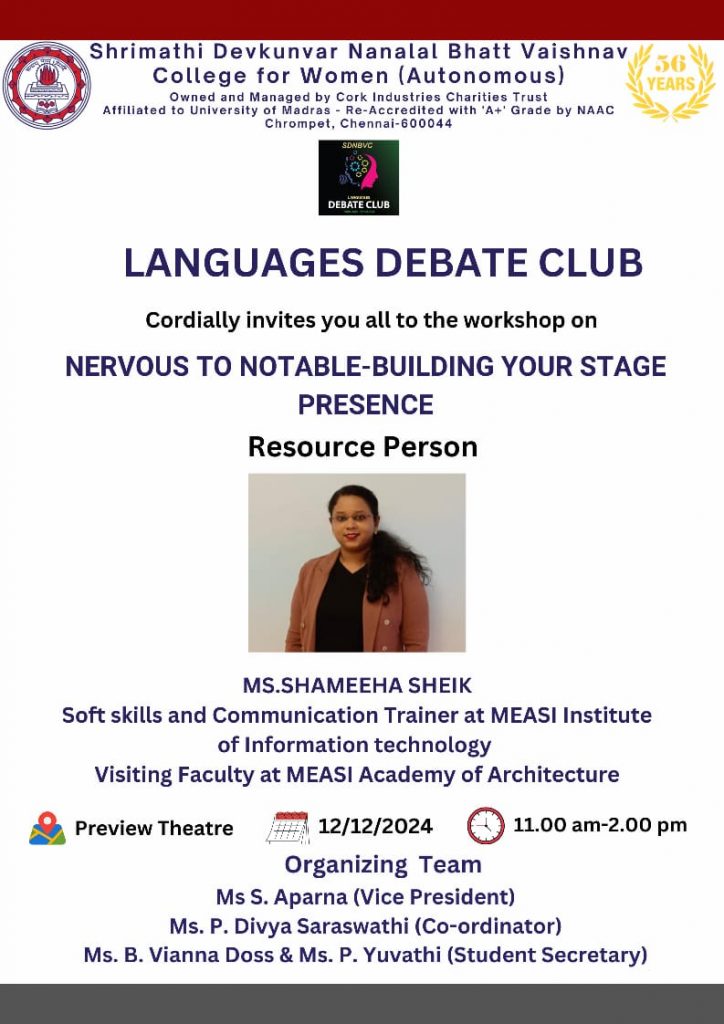
The Language Debate Club organised a workshop on “Nervous to Notable: Building Your Stage Presence” on 12th December 2024, attended by 20 students. The event was presided over by Ms. Shameeha Sheik, Soft skills and communication trainer at MEASI Institute of Information Technology and a visiting faculty member at MEASI Academy of Architecture. Followed by the invocation, Ms. Vianna Doss (I Psy) rendered the welcome address. Ms. Keerthana (I B.C om CS) introduced the resource person.
Ms. Shameeha Sheik, a soft skill and communication trainer, advocated the crucial role of non-verbal clues, tonal changes, and an audience-centred approach in building a confident stance on the podium. She explained the seven qualities that the speaker has to follow on stage. During the event, she has conducted various individual and group activities which include Spin a Yarn, Make a Commercial, and JAM. She also discussed how to structure the speech and also emphasised the tips and techniques that are needed to be followed on stage. Then the session ended with the question-and-answer session. Yuvathi (I V.com) delivered the vote of thank
Strengths of The Program
The workshop stimulated the students’ interest. They enthusiastically participated in all the activities and it also helped them to learn the nuances of stage presentation skills.
Challenges
As the students’ enrolment is limited in number, it is easy to conduct the workshop. There is no difficulty in organising this workshop. It reached its objective.
Program outcome
The outcome of this workshop is that it encourages students in public speaking and it also creates an interest in debate activities that can improve critical thinking, research skills, analysis, advocacy, oral presentation, and stage presentation skills.
We the People: Debating the Essence of the Constitution

Report :
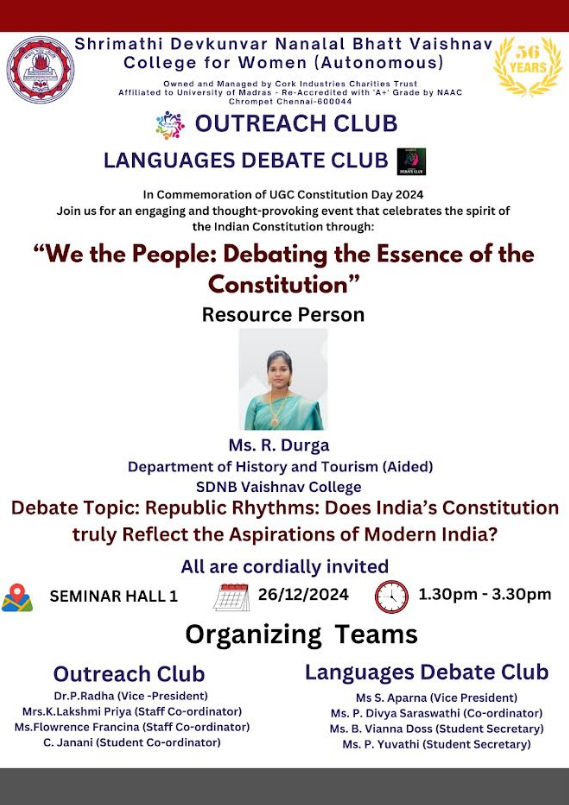
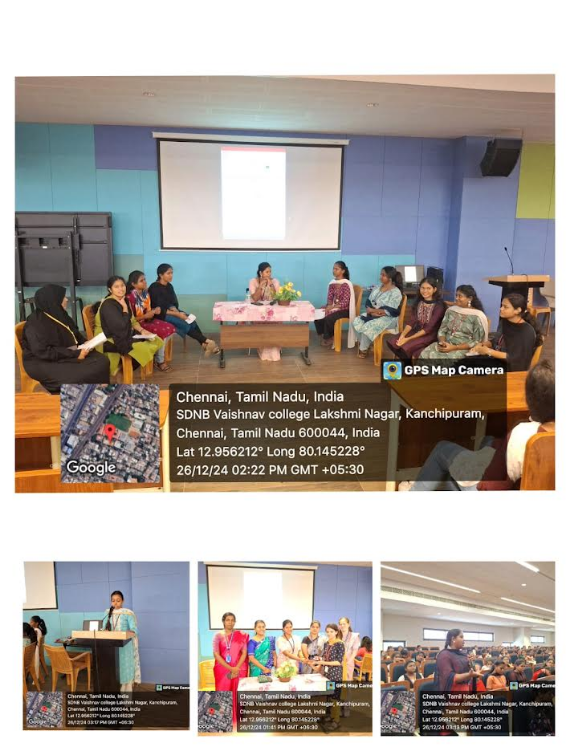
In commemoration of UGC Constitution Day 2024, the Outreach Club and Languages Debate Club collaboratively organized a seminar titled “We the People: Debating the Essence of the Constitution.” The event aimed to foster an understanding of the Indian Constitution’s enduring relevance, highlight its adaptability to contemporary aspirations and create a platform for critical analysis through engaging activities.
Objectives :
- To Promote Awareness: To educate students about the Indian Constitution’s core values and their applicability in today’s society.
- To Foster Critical Thinking: Encourage participants to explore and analyze whether the Constitution reflects modern India’s aspirations.
- To Develop Communication Skills: Enhance public speaking, presentation, and debate skills among students.
- To Celebrate Civic Engagement: Instill a sense of responsibility and pride in the Indian democratic system.
- The seminar “We the People: Debating the Essence of the Constitution” successfully achieved its objectives of spreading awareness, promoting intellectual dialogue, and celebrating the spirit of the Indian Constitution. The Outreach Club and Language Debate Club express their gratitude to the management, faculty, participants, and judge Ms. R. Durga for their invaluable contributions to the event’s success.
Event Highlights :
- PPT Presentations: Two thought-provoking presentations of 15 minutes each explored key aspects of the Indian Constitution, including its historical evolution and future challenges.
- Documentary Screening: A 20-minute documentary provided a visual and emotional connection to the Constitution’s spirit and its makers.
- Debate:
- Topic: “Republic Rhythms: Does India’s Constitution Truly Reflect the Aspirations of Modern India?”
- Participants: Five members each from the Outreach Club and Language Debate Club.
- The debate was dynamic, with participants eloquently presenting arguments on the Constitution’s relevance, its strengths, and its areas of improvement.
Strengths of the Event :
- Interdisciplinary Collaboration: The joint efforts of the Outreach Club and Languages Debate Club ensured a diverse range of perspectives.
- Engaged Audience: The interactive nature of the seminar kept the audience deeply invested in the discussions.
- Informed Participation: Participants demonstrated through research and critical thinking in their presentations and debates.
Program outcome :
- Enhanced Awareness: Students gained deeper insights into the Constitution’s principles and their significance in shaping modern India.
- Improved Communication Skills: Participants refined their public speaking, presentation, and debate techniques.
- Critical Engagement: The event fostered an environment of healthy dialogue, critical thinking, and mutual respect for differing opinions.
- Civic Responsibility: The program strengthened participants’ and attendees’ commitment to their constitutional rights and duties.
Competitions
- Two Oratorical Competitions
- One Essay Writing Competition
“The Power of Words: Enhancing Communication, Pronunciation, and Professionalism
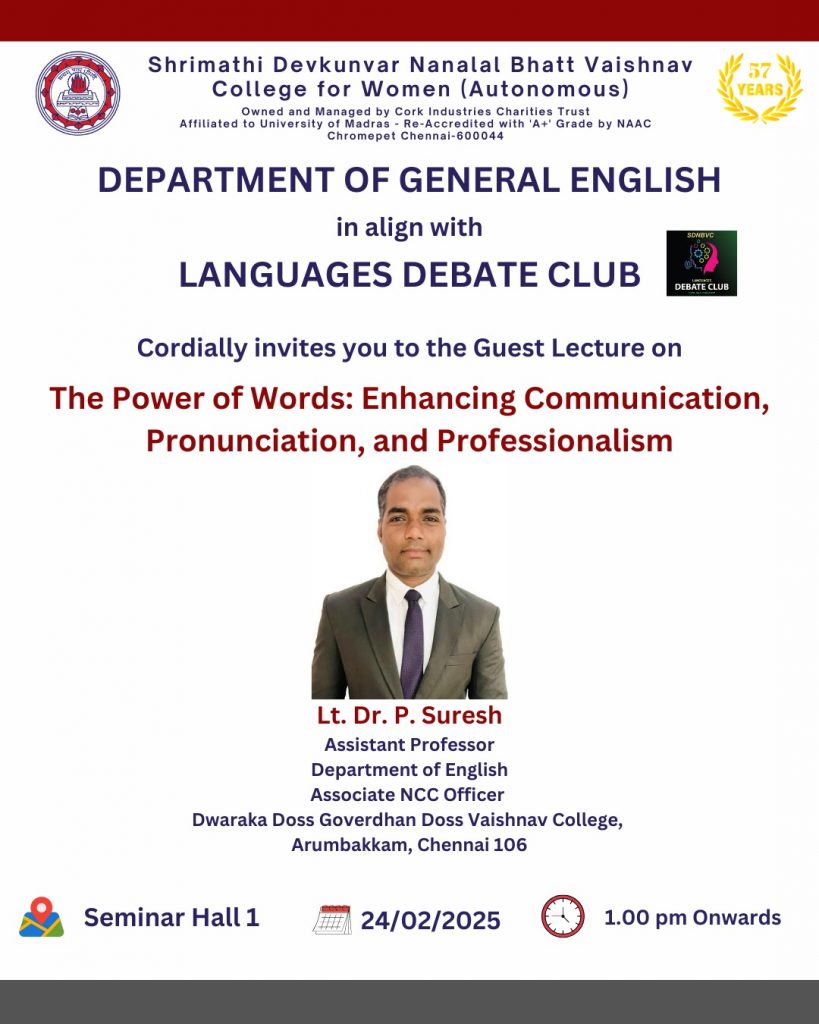
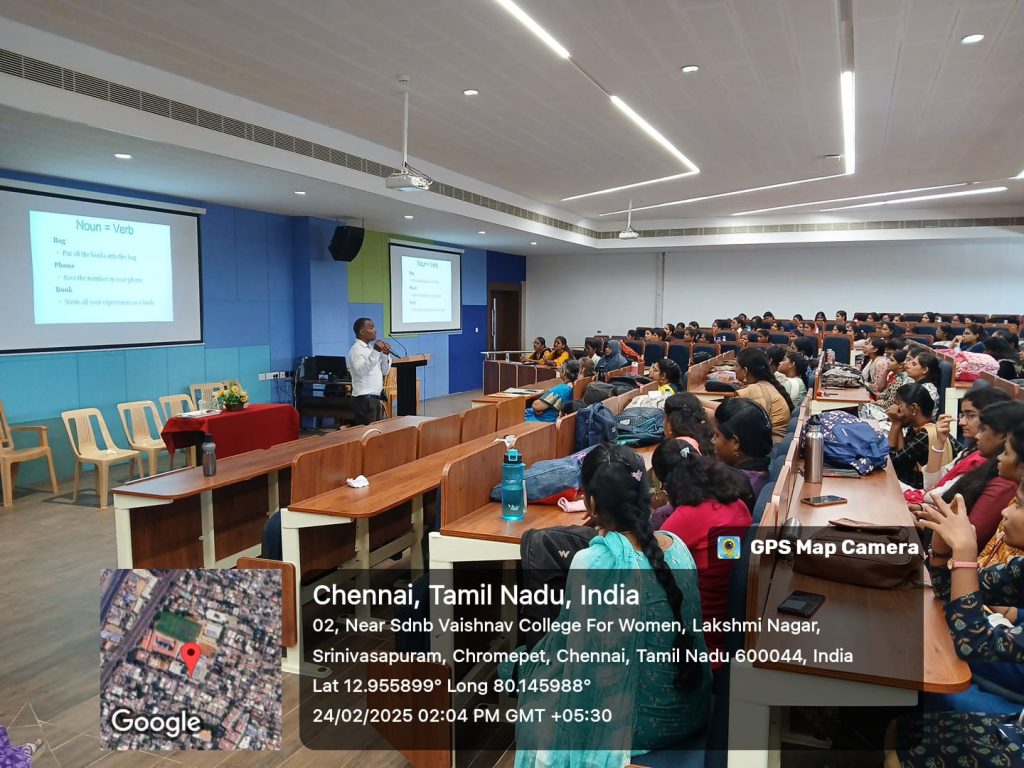
Report “The Power of Words: Enhancing Communication, Pronunciation, and Professionalism
The English Department and Language Debate Club organized a Guest Lecture on “The Power of Words: Enhancing Communication, Pronunciation, and Professionalism” on February 24, 2025. The event was attended by 206 participants, including students from second year—BA English, BSc with CGS, BSc (AI), BSC (DS), BSc( Psy)—as well as club members.
The Guest Lecture was presided over by Mr. P. Suresh, Assistant Professor in the Department of English at Dwaraka Doss Goverdhan Doss Vaishnav College, Chennai, who brings over 20 years of teaching and training experience. The session began with an invocation, followed by a welcome address delivered by Ms. Kaviya U, a first-year BBA student. Ms. Praharshini, a second-year Computer Science with AI student, introduced the resource person, Mr. P. Suresh, who spoke about the importance of communication, education, passion, and interview skills. He shared that he had never faced rejection in an interview, providing valuable solutions for remembering words and improving language skills. He also discussed how he enhanced his English proficiency by regularly visiting theatres and libraries. Additionally, he explained how differences in pronunciation can completely change the meaning of words, which fascinated the audience. The session concluded with an engaging question-and-answer segment, followed by a vote of thanks delivered by Ms. Nivethini, a second-year Clinical Nutrition and Dietetics student.
“Key Skills for Mastering the Art of Debate”
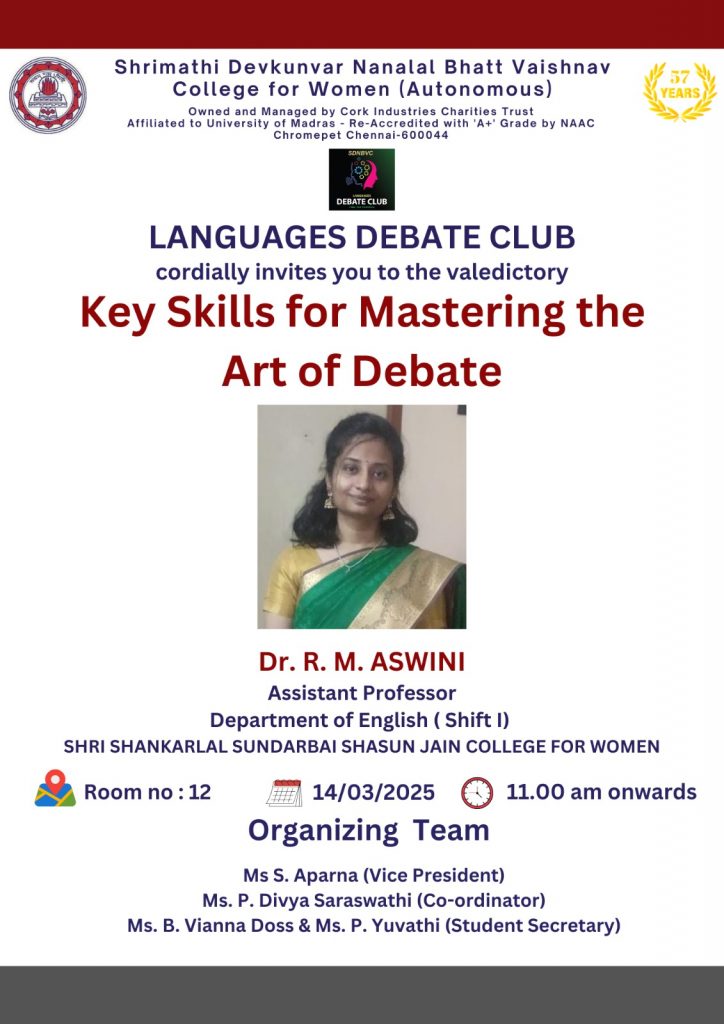
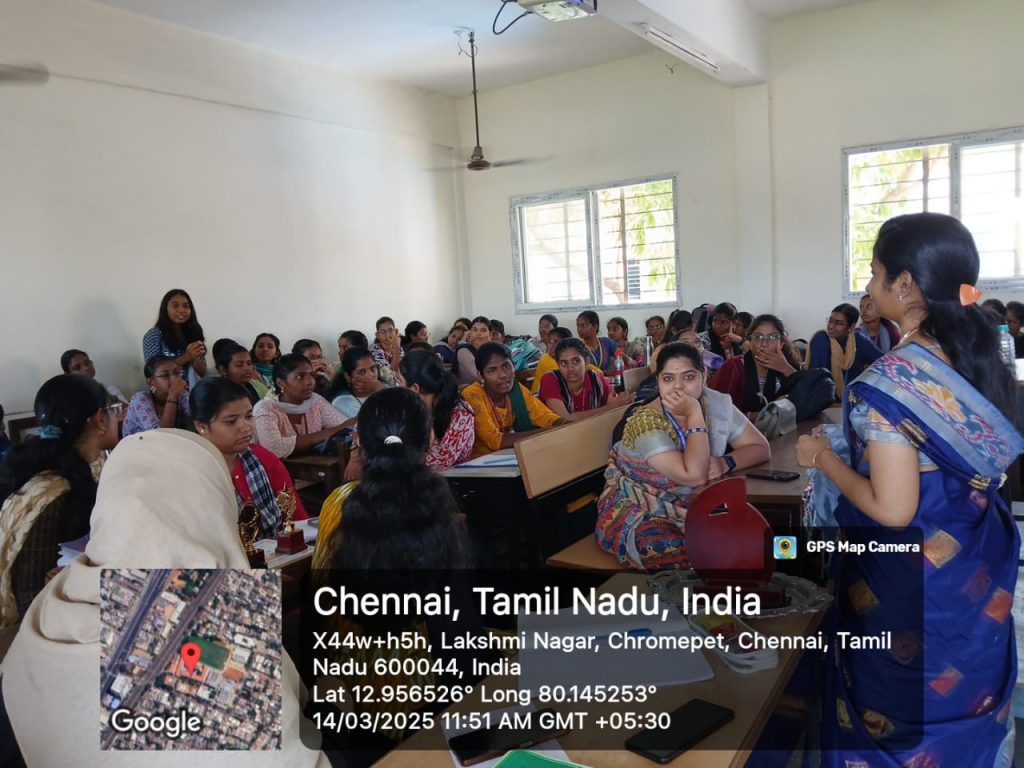
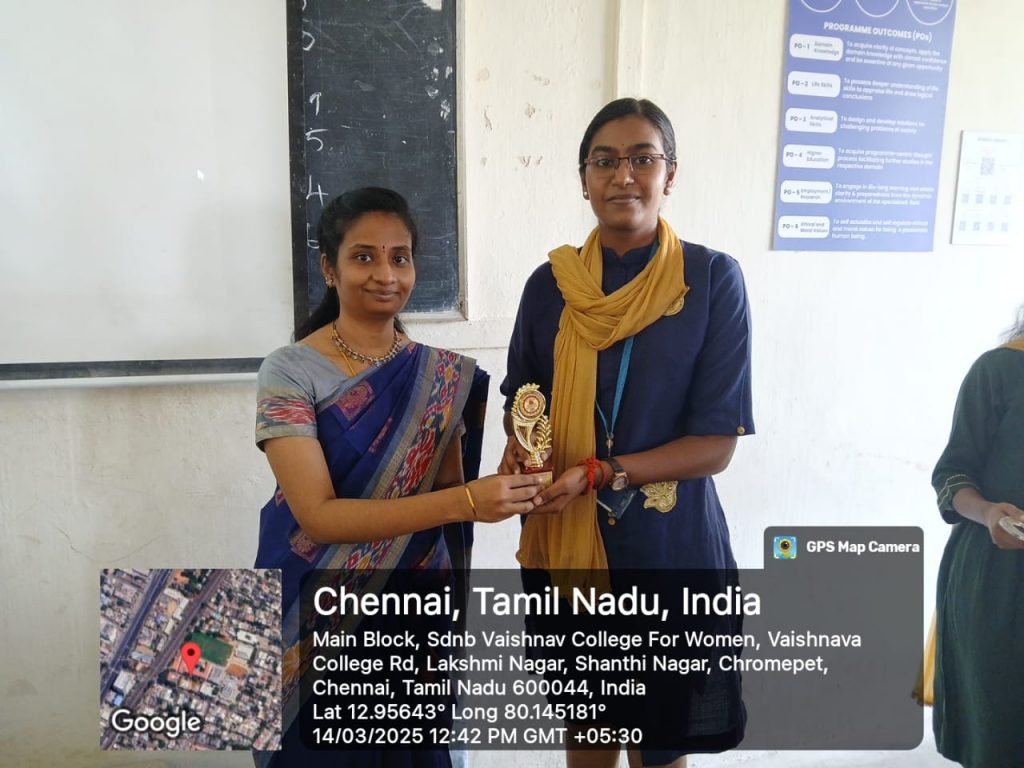
Report: “Key Skills for Mastering the Art of Debate”
The Language Debate Club organized its valedictory session on March 14, 2025, which was attended by 55 participants. The event featured Dr. R. Ashwini, Assistant Professor from the Department of English (Shift 1) at Shri Shankarlal Sundarbai Shasun Jain College for Women, as the chief guest.
The session began with a welcome address delivered by Asriya from BBA 1st year, followed by the guest introduction by Swojanya from B. Com (Hons.). After the introduction, the felicitation ceremony was conducted by faculty members, honoring Dr. Ashwini for gracing the occasion. The event was smoothly conducted by Kaviya U from BBA 1st year, who served as the master of ceremonies.
Dr. Ashwini engaged the students in an interactive and thought-provoking session, initially assessing their speaking abilities and emphasizing the essential skills required for effective communication and debate. She motivated the participants by highlighting that debates begin at home, shaping critical thinking and decision-making skills. She also stressed that every speaker plays multiple roles, including being their own moderator while making decisions. Furthermore, she emphasized that having a microphone, a stage, and an audience is a privilege that every speaker should cherish.
Throughout the session, she underlined the significance of skill development and consistent practice in becoming a confident speaker. The session was highly engaging, leaving students inspired and eager to improve their debating and communication skills.
The event concluded with the award distribution to the winners of the Block and Tackle, Tamil, and English Debate competitions. The valedictory session was a resounding success, encouraging students to continue refining their public speaking and debating abilities.
Block and Tackle
Report Block and Tackle
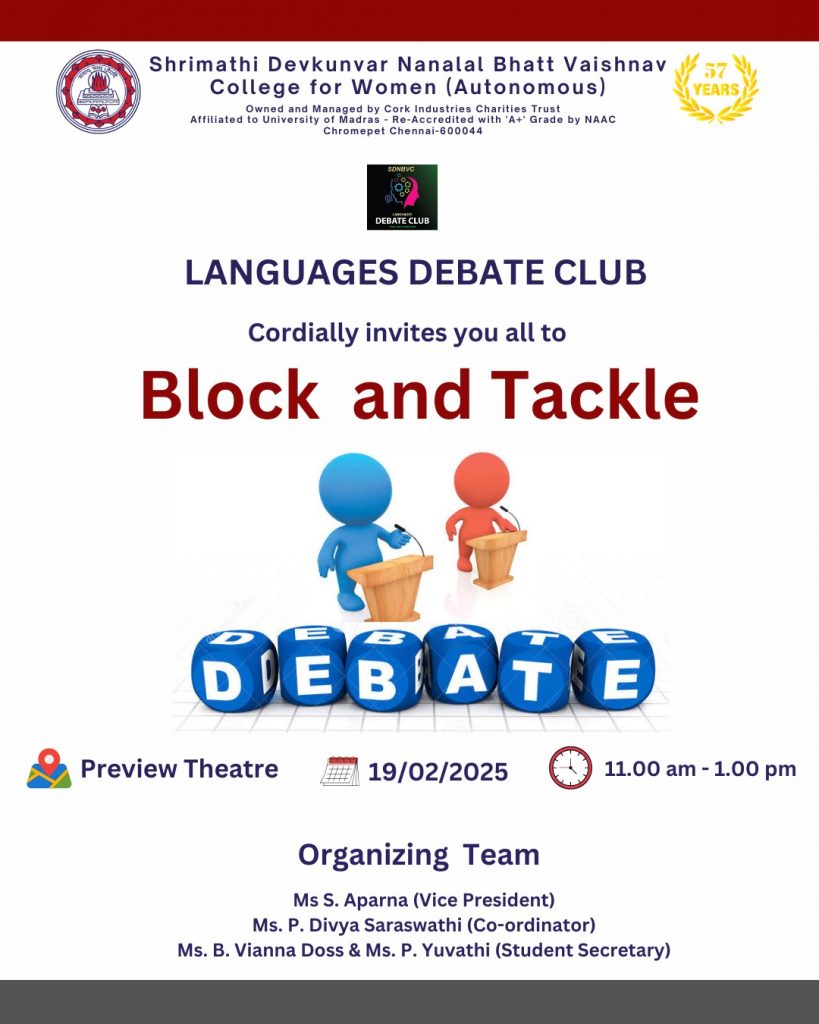
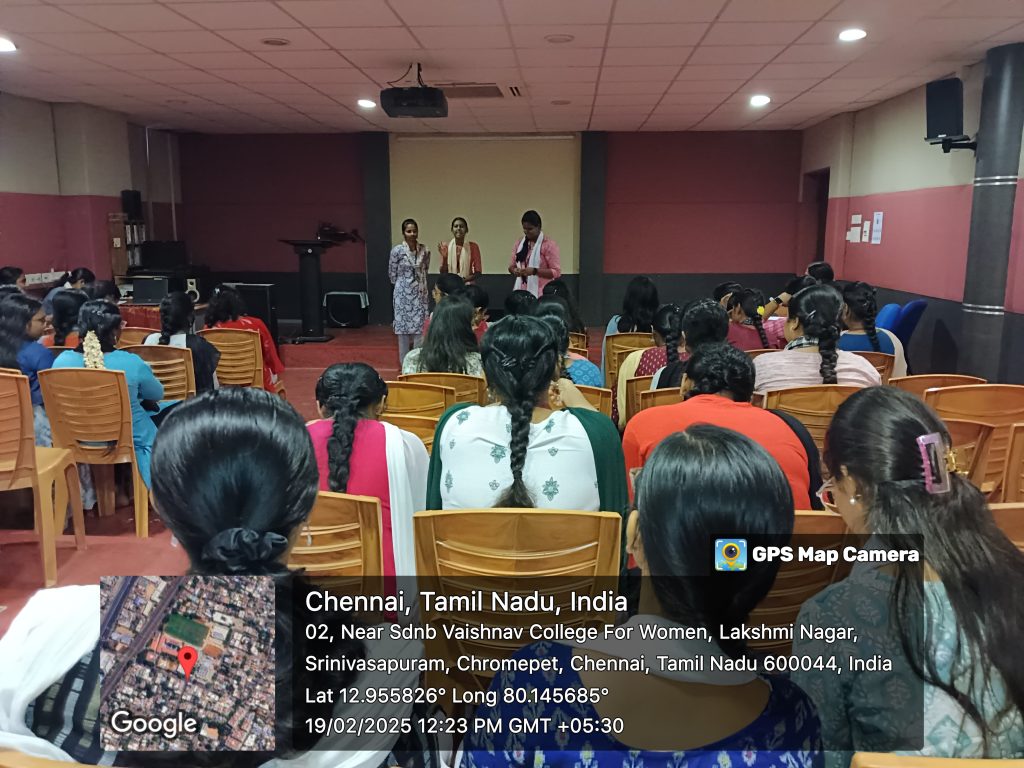
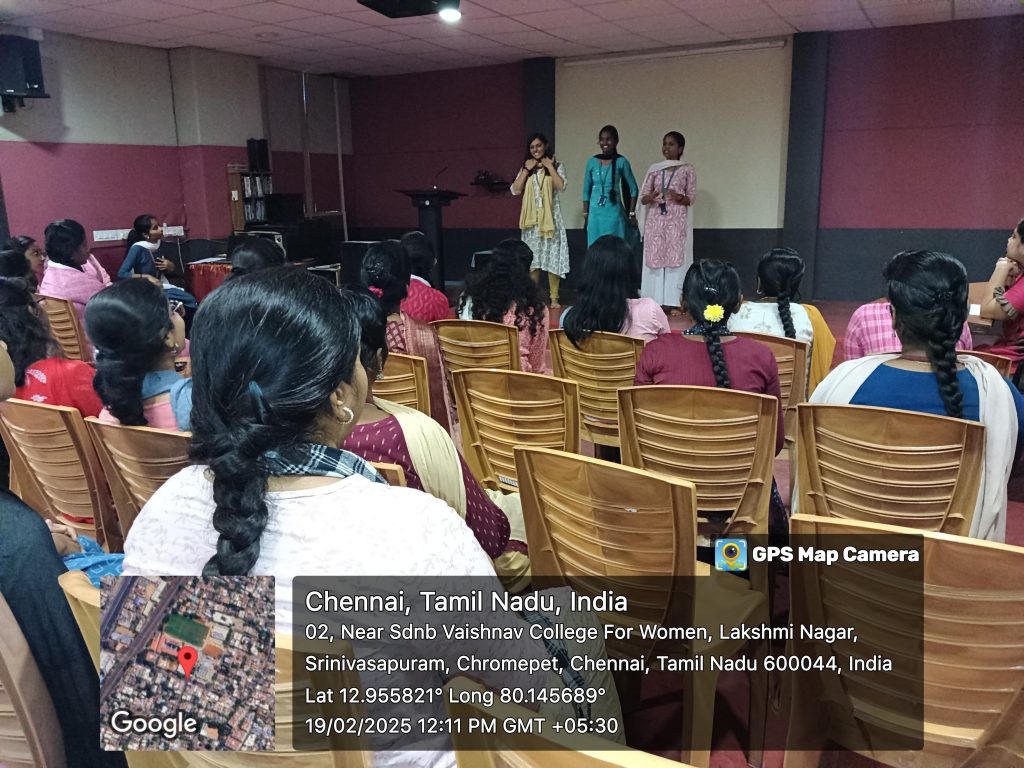
On February 19, 2025, the Languages Debate club has organised the peer activity “Block and Tackle”. All the club members were divided into 15 groups. Each group comprises three members. These groups selected their topic randomly through lots and they presented their unique perspective by speaking both for and against their assigned topic. Ms. Vianna Doss and Ms. Yuvathi served as moderators for the lively debate. After intense deliberation, three exceptionally talented groups emerged winners.
Inter-Department Oratorical Competition (English) Topic: I Have a Dream or Lessons of life.
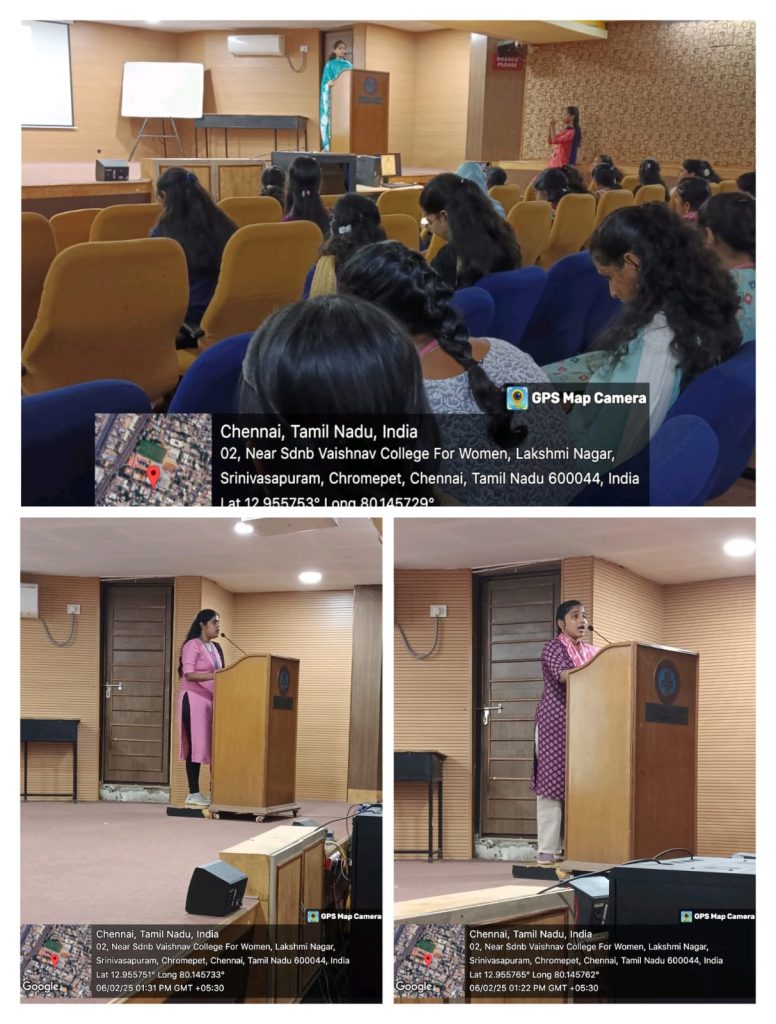
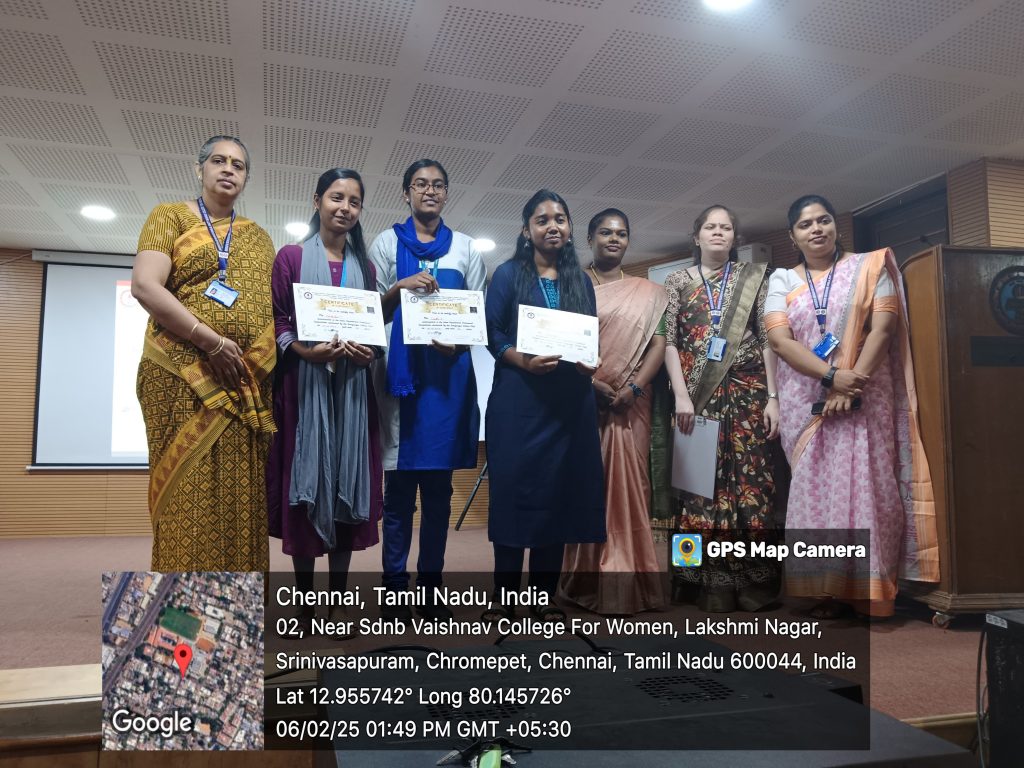
Report Inter-Department Oratorical Competition (English) Topic: I Have a Dream or Lessons of life.
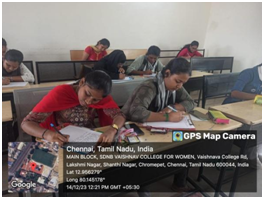
The Language Debate Club successfully organized an english oratorical competition on the topics “Lessons of life” and “I Have a Dream.” The event commenced at 11:00 a.m. with the presence of two esteemed judges, Ms. S. Hemamalini, Head of the Department of English (SFS), and Dr. R. Pavai, Assistant Professor (PG Department of English). A total of 34 participants showcased their oratory skills, making it a highly competitive event. Each speaker presented their thoughts with confidence and depth, sharing personal experiences and aspirations that resonated with the audience.
Report Inter-Department Oratorical Competition (Tamil) Topic: கனவு காணுங்கள் (or) வாழ்வியல் கல்வி
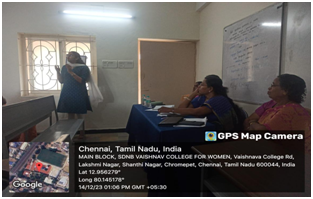
On February 5, 2025, the Language Debate Club of our college hosted a Tamil oratorical competition, which was a resounding success. The event commenced at 11.00 am with the presence of esteemed judge, Ms. P. Vijayarani, Assistant Professor, Department of Tamil (SFS).
In this competition 18 enthusiastic contestants delivered impressive speeches on the topic “கனவு காணுங்கள் (or) வாழ்வியல் கல்வி”. Each participant brought their unique perspective and vision. After intense deliberation, three exceptional talents emerged as winners. They received prizes for their outstanding performances. T. Saranya from I B. Com (General) won the I prize and II second is bagged by J. Annalakshmi from II BBA and the III prize won by A. Haripriya from II B. Com (General)
Activities 2025-26
VOICES UNBOUND
Report
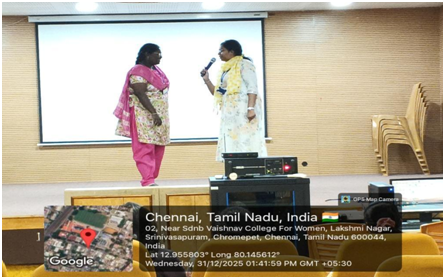
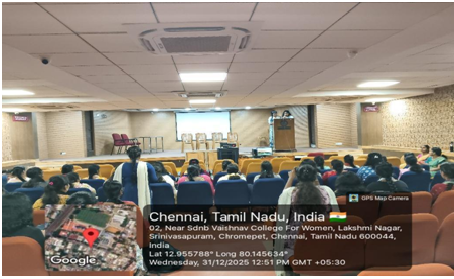
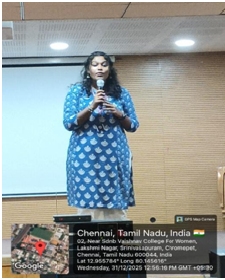
The Languages Debate Club, in collaboration with the Internal Quality Assurance Cell (IQAC), successfully conducted an enthusiastic peer activity titled “VOICES UNBOUND” on 31st December 2025. The programme witnessed the active participation of 52 students, making the event lively and engaging.
The session commenced with a solemn invocation, setting a positive and energetic tone for the programme. The event was gracefully hosted by Ms. Shobika and Ms. Asma, who effectively initiated and guided the programme with their confident and articulate hosting, contributing significantly to the success of the event.
“Voices Unbound” was designed to enhance confidence, creativity, and communication skills, providing students with a platform to voice their thoughts freely and express themselves without limitations. The activities encouraged spontaneous thinking, emotional expression, and effective articulation.
The following interactive activities were conducted during the programme:
1. Just a Minute (JAM) –Participants spoke on given topics within one minute, improving spontaneity and fluency.
2. Express and Emote – Students expressed emotions through words and actions, enhancing emotional intelligence and expressive skills.
3. Two Truths and a Lie – This activity promoted critical thinking, creativity, and interaction among participants.
4. Story Circle – Participants collaboratively created stories, fostering imagination and teamwork.
5. One Minute Argument – Students presented concise arguments, strengthening logical reasoning and persuasive communication.
The programme was highly interactive and received enthusiastic participation from the students. Overall, “Voices Unbound” successfully achieved its objective of nurturing self-expression, confidence, and effective communication skills among the participants
Photos
Strength Of the Program
The peer-based and interactive nature of the event created a dynamic learning environment that encouraged collaboration and mutual support among participants. The well-structured activities were thoughtfully designed to enhance key skills such as confidence, creativity, communication, and critical thinking. By providing an inclusive and non-judgmental platform, the event enabled students to express their ideas freely and confidently. The effective and articulate hosting ensured smooth coordination and maintained the momentum of the programme.
Challenges
Time management was slightly challenging due to the enthusiastic participation of students. A few participants were initially hesitant to express themselves, and managing equal participation among a large group required careful coordination.
Programme Ooutcome
The programme successfully enhanced students’ confidence, creativity, and communication skills. Participants gained opportunities to express their ideas freely, think spontaneously, and engage in meaningful peer interaction. Overall, the event fostered self-expression, teamwork, and effective articulation among the students.
Connect & Conquer – Transforming Potential into Success
Report
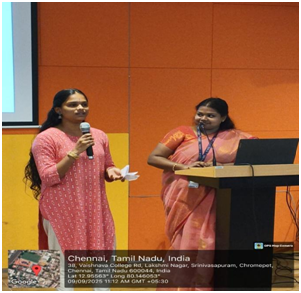
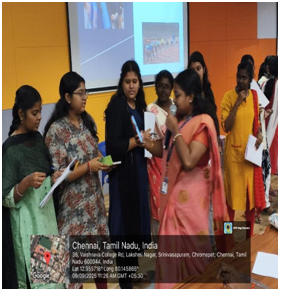
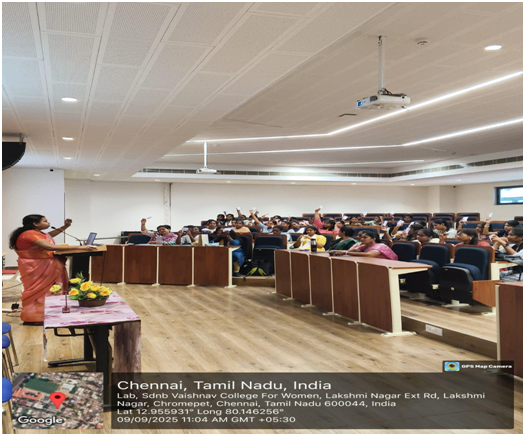
The Languages Debate Club conducted an interactive workshop on 9th September 2025. The session began with the college prayer, followed by a welcome address by Rajyashree (I B. Com CA) and the introduction of the chief guest by Hadhi Vardhini (I B.Sc. Data Science & AI). After the introduction, a felicitation ceremony was conducted by the faculty members, honouring Ms. V.R. Jaypreetha for gracing the occasion.
Ms. V.R. Jaypreetha focused on non-verbal communication, self-awareness, teamwork, public speaking postures and gestures, and effective communication. Students participated in a series of interactive activities that emphasized the importance of concentration, active listening, teamwork, and strategies for overcoming miscommunication.
Highlights of the session included activities such as ‘Fruit Blast’ for listening and quick response, ‘Pick the Cup’ for focus and creativity, ‘Mini Book’ for self-reflection, and ‘Storytelling’ to promote spontaneity and collaboration. The session concluded with a heartfelt vote of thanks by Madhumitha (I B.CA), marking the end of a successful and enriching event.
Strength of The Program
The strength of the program lay in Ms. V.R. Jaypreetha’s structured approach. She began with the fundamentals of public speaking and gradually progressed to more advanced techniques, making the session easy to follow and accessible to all participants. The workshop covered a range of essential soft skills crucial for both personal and professional development.
The session was made highly interactive through a series of engaging activities. These activities helped participants develop key skills such as effective communication, teamwork, active listening, coordination, and appropriate gestures for public speaking. Overall, it was an insightful and enjoyable learning experience that made the session both informative and memorable.
Challenges
The interactive session was well-organized and ran smoothly, leaving no room for challenges or negative aspects. It was a seamless and enjoyable experience that facilitated effective learning.
Program outcome
The session imparted comprehensive insights for personal and professional growth. It enabled a clear understanding of the participants’ existing skill levels, providing a foundation for targeted improvement. Through practical activities and personalized guidance, the workshop effectively equipped participants with techniques to enhance their communication, teamwork, and interpersonal abilities, fostering overall confidence and readiness for future challenges.
Photos
பட்டிமன்றம் பேச கற்றுக்கொள்வோம்
Report
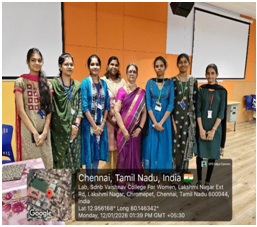
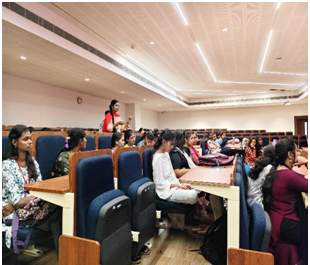
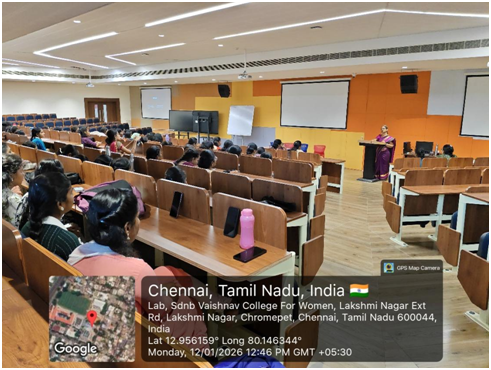
The Languages Debate Club conducted an interactive workshop on 12th January 2026. The session commenced with the college prayer, followed by a welcome address by Ms. Haripriya, a club member. This was followed by the introduction of the chief guest by Mrs. Sridevi, Assistant Professor, Department of Hindi. Subsequently, a felicitation was conducted by the faculty members to honor Dr. Saisubbulakshmi for graciously accepting the invitation and presiding over the session.
Dr. Saisubbulakshmi addressed various aspects of public debating, including effective speaking techniques, common pitfalls to avoid, the importance of body language, and strategies for presenting content confidently and persuasively. Her insights enriched the participants’ understanding and helped enhance their creativity, innovation, and communication skills.
One of the major highlights of the workshop was an engaging activity that simulated an actual debate stage on the topic “Mobile Phones: A Blessing vs. A Curse.” This activity fostered collaboration, teamwork, time management, and quick planning and execution among the participants.
The session concluded with a heartfelt vote of thanks delivered by Ms. Shalini, Club member, marking the successful conclusion of an informative and enriching event.
Photos
Strength of The Program
The workshop featured an interactive and engaging format that encouraged active student participation and provided expert guidance from Dr. Saisubbulakshmi on public debating and communication skills. The hands-on debate activity simulated a real debate, promoting experiential learning while enhancing teamwork, quick thinking, and time management
Challenges
Limited time and varying skill levels of participants posed minor challenges, making it difficult for everyone to equally practice and showcase their skills.
Program outcome
Despite these challenges, the session helped students understand the essentials of debating, including speech delivery, body language, and content presentation, while strengthening creativity, critical thinking, collaboration, and leadership skills, inspiring them to pursue further opportunities in debate and communication
Google vs ChatGPT
Report
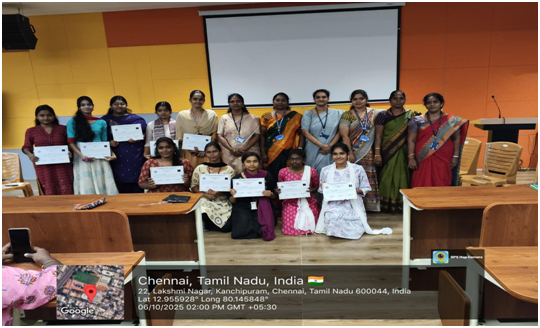
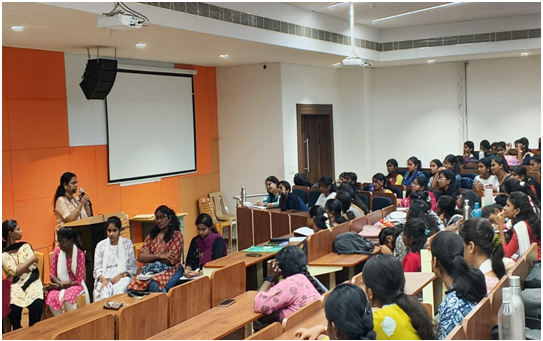
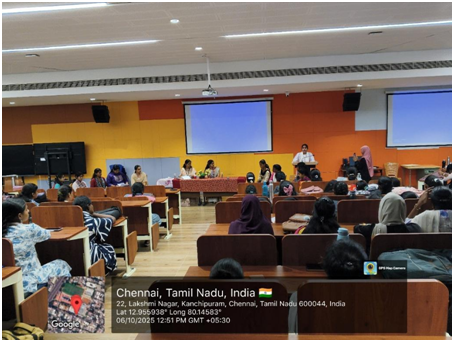
The Languages Debate Club, in collaboration with the Department of Computer Science (SFS) and IQAC, organized an engaging debate on “Google vs ChatGPT” on 6th October 2025, with active participation from 121 students. The event began with a college prayer and a warm welcome address by Ms. Swathi (III-B.Sc. CS). Ms. Rajalakshmi (III-B.Sc. CS) introduced and honoured the judge, Dr. C. Victoria Priscilla, Associate Professor and Research Supervisor, who was presented with a token of appreciation.
The debate featured two teams:
● Team ChatGPT highlighted ChatGPT’s strengths, such as direct and instant responses, improved creativity, personalized learning, support for various learning styles, and simplified understanding of complex topics. They also pointed out the time-consuming nature of navigating multiple links on Google.
● Team Google defended its legacy and strengths, emphasizing its vast database, user-friendly interface, accessibility, and historical reliability. They argued that “Old is Gold” and raised concerns about ChatGPT, including its paid features, occasional irrelevant outputs, lack of website access, and its potential to reduce critical thinking and cognitive skills.
The debate was energetic and thought-provoking, with participants actively presenting and defending their views.
Dr. C. Victoria Priscilla concluded the session by sharing her own experiences with both platforms and offered a balanced perspective that made the session insightful and interactive. The event concluded with a vote of thanks by Ms. Bathrika (I CGS), appreciating everyone involved in making the event a success.
Strength of The Program
The inter-departmental coordination ensured smooth execution, while the relevant and contemporary topic sparked thoughtful discussion on emerging technologies. The structured debate format promoted critical thinking, communication, and analytical skills. The presence of Dr. C. Victoria Priscilla as the judge added academic depth, and her closing remarks provided valuable insights. Overall, the active student involvement and expert guidance made the programme impactful and enriching.
Challenges
One of the main challenges was ensuring active participation from all attendees. Maintaining audience engagement throughout the session was also a task. Time constraints during the debate limited some speakers. Managing the flow of the event required constant attention..
Program outcome
The debate enhanced students’ critical thinking, public speaking, and research skills while encouraging awareness of emerging technologies like Google and ChatGPT. Participants gained confidence in presenting and defending their viewpoints, fostering both communication and analytical abilities. The session also promoted healthy competition and teamwork among students. Overall, it provided an engaging and educational experience that contributed to their academic and personal growth.
Photos
GST Rationalisation- “Pros vs. Cons”
Report
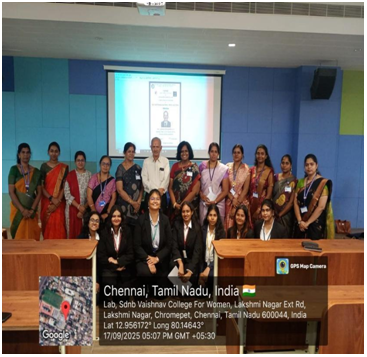
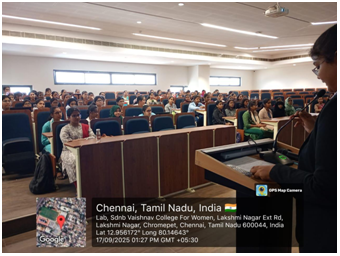
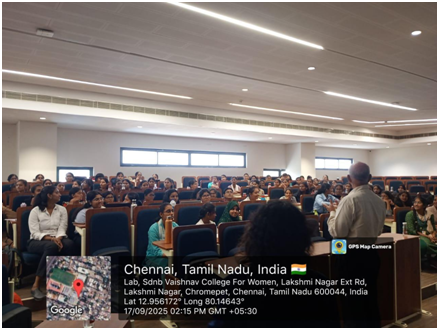
The Languages Debate Club in collaboration with IQAC has organised the debate on the topic “GST Rationalisation-Pros Vs. Cons”.
Session 1: The Rationale and Roadmap
This session, moderated by Mr. Sampathkumar, focused on the fundamental reasons behind the need for GST rationalisation in India. The discussion began with a review of the current GST structure, highlighting the multi-tiered tax slabs and the complexities they create for businesses, particularly for MSMEs (Micro, Small, and Medium Enterprises). Panelists discussed the original vision of ‘One Nation, One Tax’ and how the current system deviates from it. Key topics included the cascading effect of certain taxes, the inverted duty structure issue, and the challenges in input tax credit claims. The moderator steered the conversation toward a potential roadmap for a simpler, more efficient tax regime, exploring models from other countries with more streamlined GST systems. There was a consensus that rationalisation is crucial for boosting economic growth and improving the ease of doing business.
Session 2: Economic Impact and Implementation Challenges
The second session, also moderated by Mr. Sampathkumar, delved into the potential economic impact of GST rationalisation. The discussion covered how a simplified tax structure could lead to increased tax compliance, reduce administrative burdens, and stimulate consumer demand. Panelists presented case studies and data models illustrating the positive correlation between tax simplification and economic expansion. A significant portion of the discussion was dedicated to the challenges of implementation. This included concerns about revenue neutrality for both the central and state governments, the potential for inflation in certain sectors, and the technical complexities of updating the GST Network (GSTN) to accommodate the new structure. The session concluded with a Q&A where participants raised questions about the timeline for implementation and the specific sectors that would be most affected by the changes. The moderator emphasized that a phased approach and transparent communication would be key to a successful transition.
Photos
Strength of The Program
The event was well-structured, with focused sessions that addressed both the rationale behind GST rationalisation and its economic and implementation challenges. Discussions were comprehensive, highlighting tax complexities, business impacts, and the benefits of simplification. The use of case studies and global models added practical depth, while the interactive Q&A session encouraged active participation. The emphasis on a phased approach and clear communication reflected strategic planning, making the event insightful and engaging.
Challenges
The programme enhanced participants’ understanding of GST rationalisation by providing clear insights into its necessity, economic implications, and implementation challenges. It encouraged critical thinking through in-depth discussions and real-world examples, while also promoting active engagement and dialogue. Overall, it equipped attendees with a well-rounded perspective on a significant economic reform.
Program outcome
The outcome of the programme was a deeper understanding among participants of the need for GST rationalisation and its potential impact on the economy. It fostered critical thinking, improved awareness of policy challenges, and encouraged active engagement through interactive discussions. Participants gained valuable insights into the complexities of tax reforms and their practical implications.
Reading to Reasoning: Voice, Thought and Debate
Report
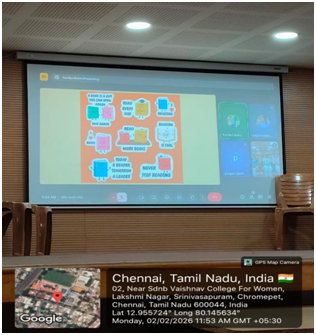
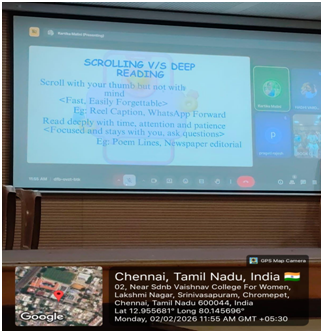
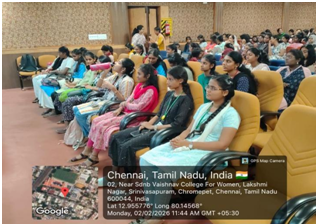
The Book Club in collaboration with the Languages Debate Club and IQAC organized a webinar that brought together insightful discussions on books and debate, creating an engaging intellectual platform for students. The session featured Ms. Malini, who spoke passionately about the importance of books in shaping thought, imagination, and personal growth. She emphasized how reading nurtures empathy, strengthens language skills, and broadens perspectives. Through relatable examples and reflections, she encouraged students to cultivate a consistent reading habit and view books as lifelong companions in learning. The second session was led by Ms. Safrine, who focused on the art and value of debate. She highlighted how debating enhances critical thinking, confidence, and effective communication. Stressing the importance of listening, reasoning, and respectful disagreement, she motivated students to actively participate in discussions and forums. The webinar was highly informative and interactive, inspiring participants to engage more deeply with reading and debate as powerful tools for academic and personal development
Photos
Strength of The Program
p style=”font-family: ‘Inter’;”>The webinar was intellectually enriching, bringing together two impactful themes—books and debate—through engaging speakers. The resource person,Malini’s insights on reading inspired students to value books as tools for knowledge and personal growth, while the resource person,Safrine’s session on debate encouraged critical thinking and confident expression. The programme was well-structured, interactive, and relevant to students’ academic development, making it both informative and motivating.
Challenges
Maintaining active participation in an online mode posed certain challenges, such as limited direct interaction and varying levels of student engagement. Time constraints may have restricted extended discussions and question-and-answer sessions. Additionally, ensuring consistent connectivity and technical coordination required careful management.
Program outcome
The webinar enhanced students’ understanding of the importance of reading and debating in shaping voice, thought, and perspective. It encouraged them to develop better communication skills, analytical thinking, and confidence in expressing ideas. Overall, the programme successfully motivated students to actively engage in literary and debate-related activities for their academic and personal growth.
Inter-Departmental Oratorical Competition
Report
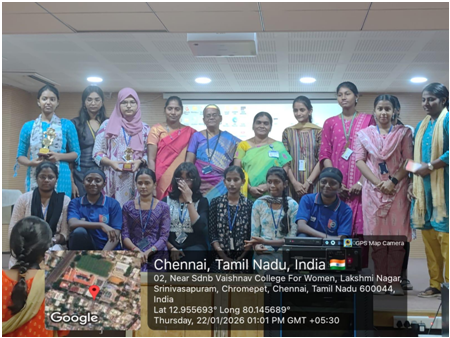
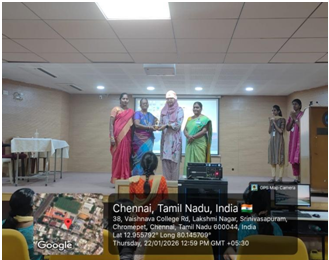
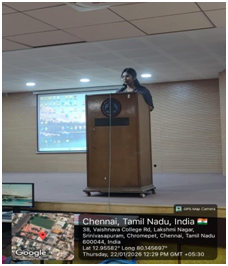
The Languages Debate Club and the Disaster Risk Reduction Club conducted an oratorical competition on 22nd January 2026. The session commenced with the college prayer, followed by a welcome address by Dr. N. Dhanalakshmi. The introduction of the chief guest was presented by Ms. Asma, a club member. Subsequently, the faculty members conducted a felicitation to honor the resource person for graciously accepting the invitation and presiding over the session. The resource person, Dr. C. Senju Lakshmi, Assistant Professor at SDNB judged the competition.
The programme was conducted successfully and received an enthusiastic response from the students. Participants actively shared their views on the topic “சமூக ஊடகங்களும் பேரிடர் விழிப்புணர்வும்” (Social Media and Disaster Awareness), highlighting the vital role of social media in disseminating disaster-related information, issuing early warnings, and raising public awareness, while also emphasizing the responsibility of users to avoid spreading misinformation. Another topic, “இயற்கையை நேசிப்போம் இடர்களைத் தவிர்ப்போம்” (Loving Nature and Avoiding Disasters), focused on the importance of environmental protection, sustainable practices, and risk reduction to prevent natural disasters.
The competition inspired students to think critically about their role in society and motivated them to use social media positively for disaster preparedness and environmental conservation. The event was informative, engaging, and highly impactful, leaving the audience more aware of disaster risk management and the importance of living in harmony with nature. Around 15 students participated, and the best three participants were awarded trophies and certificates.
Photos
Strength of The Program
The oratorical competition was a testament to the exceptional skills of our participants. Every student actively participated, showcasing their confidence, quick thinking, and remarkable oratory abilities. Their impressive vocabulary, articulate speech, and commanding voice left a lasting impact, making the event a huge success. The participants’ ability to effectively convey their thoughts and ideas was truly commendable, and it’s clear that our debate program is in great hands.
Challenges
The primary challenge faced by participants was the time constraint. With limited time to present their views, many struggled to fully develop their ideas, often having to prioritize key points and articulate them clearly. This tested their ability to think quickly, organize their thoughts, and maintain composure under pressure.
Program outcome
The competition fostered confidence, critical thinking, and public speaking skills among participants. It encouraged students to reflect on pressing topics such as social media’s role in disaster awareness and environmental sustainability. The event highlighted the talent and preparation of the participants, leaving a lasting impression on the audience. Its success has paved the way for more such events, empowering students to become confident speakers and responsible communicators.